Protecting Users & Data in the Everywhere Enterprise

How should organizations reinvent themselves to drive transformation in the post- COVID-19 world?  First, we need to understand that the traditional security model was designed for on-premise organizations with a well-defined IT perimeter.  That no longer applies in the perimeter-less world.  Why, because customers are everywhere; workers are everywhere and infrastructure and data are everywhere.  The enterprise needs to be everywhere to support them.

Passwords based security, which assumed that users operated and accessed business information only form within the enterprise IT perimeter were adequate in the past. But in today’s IT environment, where users access data from a variety of untrusted devices, apps, networks, locations, and services – passwords alone are no longer sufficient.  It should be no surprise that passwords are still the number 1 cause of data breaches. According to the Verizon Data Breaches Investigations report – 81% of breaches involved weak or stolen passwords. This is because passwords are easily compromised.

In the reality of today’s security world, how does an organization protect itself? With a Mobile Centric Zero Trust approach and framework to security. Zero trust assumes that bad actors are already in the network, and secure access is determined by an ‘always verify, never trust’ approach. The zero-trust method requires that you verify the device, user, apps, networks, and presence of threats before granting access. Also, you should have on-going enforcement. But with many theories about Zero trust, how do you ensure you’ve taken the right approach.

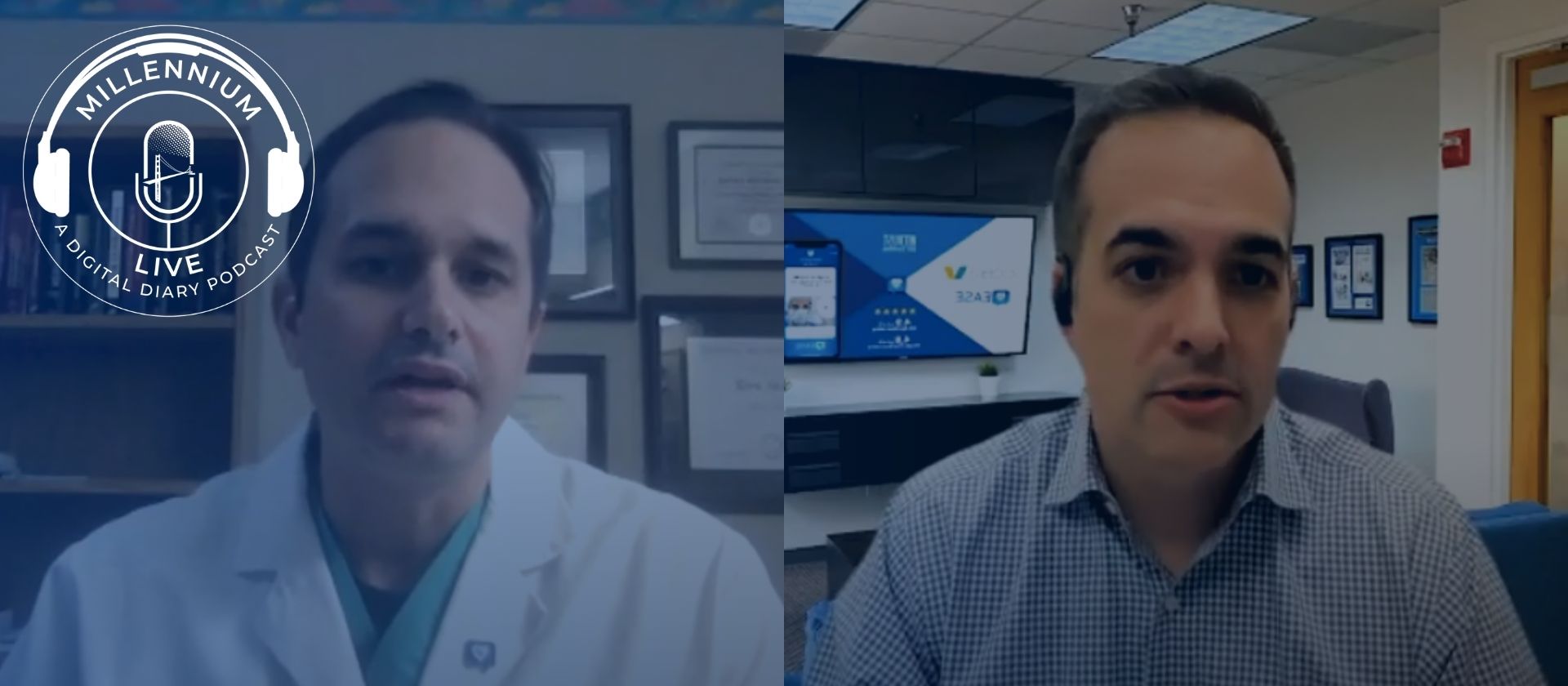
Alex Mosher, Global VP of Solutions & Strategy at Mobileiron gave us an in depth look at all things Zero Trust at our Transformational CISO Virtual Assembly this September.

Click here to watch the full session.


#MillenniumLive with Tellabs on Enterprise Network Design & Deployment

Discover how Tellabs Optical LAN (OLAN) changes how enterprise networks are designed and deployed with the flexibility and efficiency fiber distances offer; all while delivering optimal security and performance.

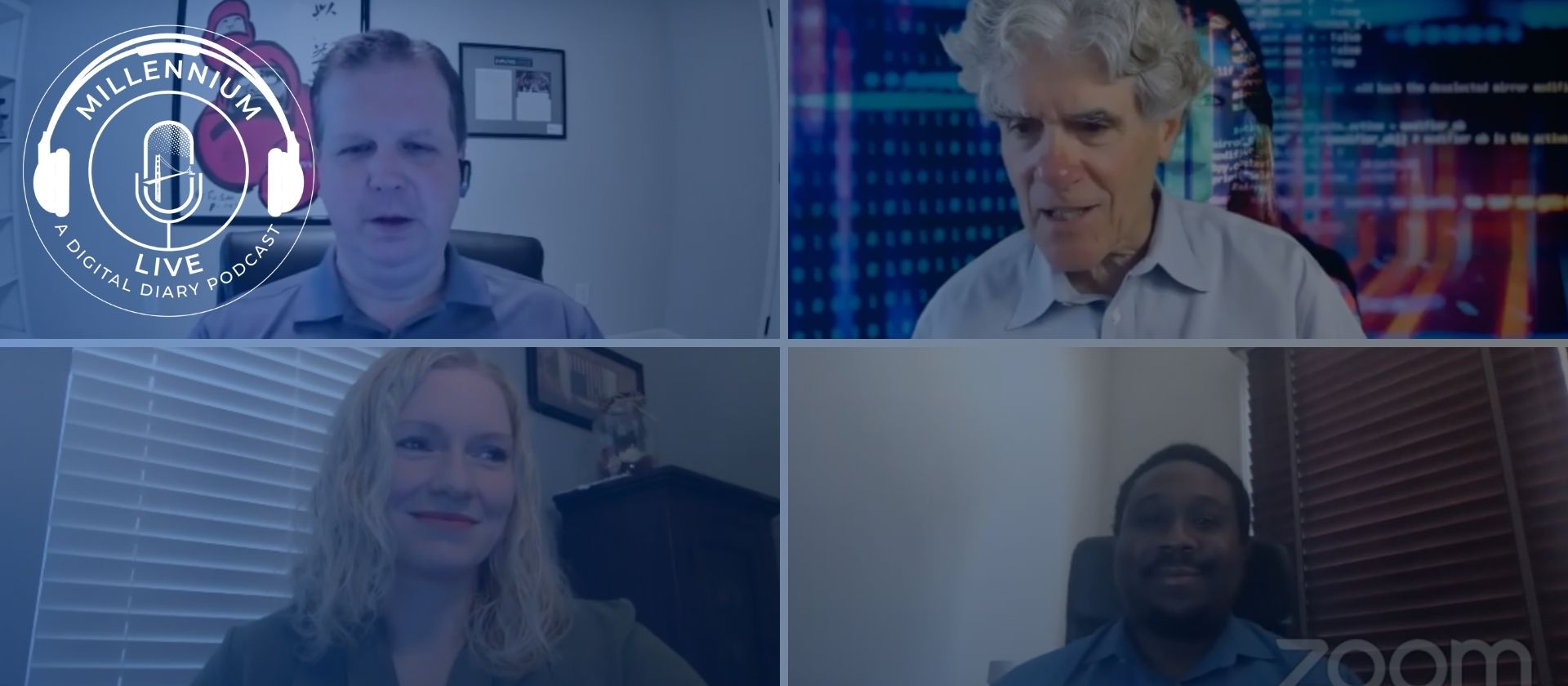
#MillenniumLive is joined by the team at Tellabs: President and CEO Rich Schroder, Vice President of Enterprise Sales Kristen Gonzalez, and Director of System Engineering Operations Joel Fischer.

Watch the full video interview below!

About Tellabs

Connecting is more than switches and cables. Connecting is expertise, applied. More and more enterprise and government entities see the dramatic advantages that passive optical solutions have over traditional copper-based infrastructure. Whether it’s for home or hospital, corporation or college, hotel or government agency, Tellabs has the expertise. Tellabs helps customers connect through our optical network technologies.

Tellabs Optical LAN (OLAN) is a simple, scalable, stable and secure fiber-based enterprise network solution. It simplifies the design, build and operations of local area networks that continue to grow more complex. Most importantly, Tellabs Optical LAN delivers ultimate security in conjunction inherently more secure fiber cabling, centralized management that assures consistent policies and procedures and fewer points of network access vulnerability.

Go here for more information

Digital Enterprise Q/A with Upcoming Keynote, Bill Murphy!

Digital Enterprise & Data are playing a larger role in business today than ever before, which is why we’re bringing together technology leaders for 2-days of problem-solving, brainstorming & exclusive access to industry research. On September 30th, our Digital Enterprise & Data Virtual Assembly kicks off with seasoned technology leader Bill Murphy, former Chief Technology Officer at Blackstone & founding Chief Technology Officer for Capital IQ. Presently, Murphy is a Managing Partner at Cresting Wave, a board member at Accurics & a Senior Advisor to McKinsey.

Leading up to his keynote address, we interviewed Murphy on some of the leading trends & challenges technology leaders are facing today. Interested in Attending the Full Keynote? Go here to RSVP for the Virtual Assembly. 

Q: COVID-19 has given a renewed value to technology – how do you think this will impact digital enterprise as we approach the new year?

BM: I am an optimistic person so I think the silver lining of COVID is the change and technology adoption that has been driven out of necessity. Change management is always the hardest part of technology leaders’ jobs and a catalyst is really important to make things happen really fast. I think the key is to learn from how people were on-boarded to Zoom and other remote work and replicate that formula with other projects and changes in the future.

Q: What advice do you have for leaders that are struggling to make the most of their customer intelligence in an evolving digital landscape?

BM: Understand the organizational dynamics on why it is hard to succeed – think about changing the conditions for success and not just on the tools.

Q: So many businesses have been forced to shift their strategy to digital-first. In your experience, have you noticed any common mistakes or challenges that other organizations were struggling with?

BM: The most common mistake so many organizations make is to always focus on the “quick wins” — this mentality makes the hard, long, foundational projects difficult to get prioritized and leads to mountains of technical debt. The business leaders don’t understand it and the technology leaders have a hard time explaining it and then when companies need to pivot to use more technology they can’t do it effectively. Everyone then blames the tech teams, but they typically are fighting with legacy issues and are undermanned in the battle.

Q: What is your opinion on the role of automation in today’s digital enterprise – is it the solution to our problems or has it yet to mature enough to make an impact?

BM: Yes, it can solve a lot of problems but it needs to be embraced at the top of the house to get people to get it implemented — it is not just a technology project, the whole organization needs to get behind it

Q: We are so excited to have you join us next month as our Virtual Assembly Keynote Speaker. Can you give us a preview about the message or story you want to convey to our audience?

BM: During this pivot in my career and as I begin my next chapter I realized I have been doing this for 25 years and have amassed a lot of lessons in that time. Hopefully I can share them and prevent others from making the same mistakes I did along the way.

Gene McCarthy to Keynote Our Transformational Retail & CMO Assembly!

We are honored to announce Gene McCarthy, Former President & CEO of ASICS, as the featured keynote speaker for our upcoming Transformational Retail & CMO Virtual Assembly. McCarthy has an astonishing track record of digitally transforming brands in the athletic & outdoor space, and he’s held executive-level positions with many of the top players in the industry: Nike, Under Armour, ASICS, Reebok, Timberland & Merrel. He now serves as the Founder & Principle at Top League Advisory, where he focuses on brand vision and strategy.

On September 30th, McCarthy will tackle the leading challenges that marketers & retailers are facing today, followed by an interactive Q/A segment with the audience.

Don’t want to miss it? Go here to RSVP for the Virtual Assembly!

About Gene McCarthy

With a career spanning 40 years working with top global brands across the athletic and outdoor industries, Gene McCarthy is a distinguished leader and change maker. He has held seats on various boards including the Two Ten Foundation, Sports and Fitness Industry Association (SFIA), Footwear Distributors and Retailers Association (FDRA) and the Van Cortlandt Park Conservancy. His last major role was as the President & CEO of ASICS America Group where he oversaw the North and South America regions.

Mr. McCarthy has been a featured speaker at Leaders Week in London and he has been a guest speaker at colleges and universities including University of Southern California, Princeton University, Columbia Business School, Marquette University and MIT. A native New Yorker, Mr. McCarthy attended Fordham University where he was a track and field All American. He also was a semi-finalist in the 1980 US Olympic Trials. In 1979 he penned a story for the New York Times titled “Chasing the Four Minute Mile Along the Streets of the Bronx”.

DarkTrace Cyber AI Analyst: Augmenting Your Security Team with AI-Driven Investigations

The myriad of security tools used by businesses today creates massive quantities of data and surfaces too many alerts for analysts to effectively manage. As threats become increasingly sophisticated and the cyber security industry continues to face a skills shortage, over-worked and under-resourced teams urgently need augmentation.

Cyber AI Analyst, the product of a research initiative from Darktrace’s R&D Center in Cambridge, was built to augment security teams and optimize threat investigation. It continuously examines every event that arises in Darktrace’s Enterprise Immune System, emulating expert human thought processes for autonomous triaging and reporting.

The technology combines expert analyst intuition with the consistency, speed, and scalability of AI. It illuminates the highest priority threats at any one time and rapidly synthesizes all of the context around an attack into a human-readable report.

By applying a combination of supervised and unsupervised machine learning, as well as deep learning methods and advanced mathematics, Cyber AI Analyst can do much of the heavy lifting a human would otherwise have to do. It leverages insights collected from Darktrace’s world-class experts over years of threat investigation to make highly accurate decisions and offers this wealth of knowledge to the public for the first time.

With Cyber AI Analyst, time-to-meaning and time-to-response are dramatically reduced – allowing your team the time to use their expertise where it really matters.

Go here for the full report

The Pivot Project: Crowdsourcing Solutions to COVID-19 Problems 

The overwhelming implications of COVID-19 have defined a generation, but despite the hardships Americans are facing today, it’s shown us that social media is a momentous tool for building awareness & delivering aid to those in need. The Pivot Project, co-founded by our Advisory Board member, Cynthia Johnson, is set to do just that: utilize digital content & social media to crowdsource solutions to COVID-19’s problems – at a mass scale. 

The Millennium Alliance is honored to announce a partnership with Pivot Project to bring awareness to social causes that are actively seeking solutions. So you can stay in the know, we will regularly share success stories & opportunities on our social media & Digital Diary. We’re also excited to share that pretty soon, you’ll have the opportunity to connect with Pivot Project’s team at our virtual assemblies to learn how your organization can get involved. 

Cynthia Johnson adds, “Once quarantines started being implemented in the beginning of the pandemic, Nick Peacock-Smith (Millennium Alliance Alumni) and I connected over our frustration with feeling helpless as the world seemingly fell apart,” said Cynthia. “Over a short conversation, we discovered that we weren’t helpless and we weren’t alone in how we felt. Many people in our networks are helpers. We believe and have repeatedly been proven right that well-connected, well-intentioned people love to provide solutions and could if they clearly understood the problems. This realization was our inspiration to launch the Pivot Project, to make an impact and help as many people as we can. This partnership with Millennium Alliance is an obvious fit for creating real-time solution-center collaboration with real leaders who care about making a long-lasting impact. Together is how we will make a difference in the lives impacted by COVID-19. We look forward to the outcomes these conversations create.”

We asked Cynthia, “What is the value of companies getting involved during this time?”

“The value for companies getting involved during this time is the collaboration between brands, and brands and communities. We also understand that marketing and advertising are highly sensitive and a bit difficult at this time. Pivot Projects open the door for meaningful and impactful campaigns that are timely, helpful, and demonstrate positive brand sentiment.”

Interested in learning more about how you can help? Go here for more information. 

How Does The Pivot Project Work?

When creating the concept for Pivot Project, Cynthia & her team recognized that there were already many organizations that were helping out and many initiatives that already exist. They asked themselves, “How can we help in a way that provides value and doesn’t dilute or duplicate current efforts?” That’s when they realized a common theme among many of the existing initiatives; they needed more reach and awareness. 

How can we help people and organizations find solutions? The Pivot Project’s answer: to create a centralized location for state and federal resources, vetted non-profit organizations, public initiatives, and develop a team of volunteer media partners, brands, influencers, and writers to help deliver the additional reach.

#MillenniumLive Keynote Series: John Carlin, Author of “Dawn of the Code War”

The Millennium Alliance was honored to have John Carlin as the virtual Transformational CISO Assembly’s opening keynote speaker. He is the former Assistant Attorney General for the DOJ’s National Security Division. John currently chairs the Global Risk & Crisis Management Practice Group and the National Security Practice Group at Morrison & Foerster & hosts the podcast, “Cyber Space with John Carlin”.

#MillenniumLive offers exclusive access to John Carlin’s keynote address, in which he shares cyberwar stories from serving as the Assistant Attorney General for the DOJ, insights on how COVID-19 is affecting the cyber landscape & advice on how to navigate these challenges.

powered by Sounder

Watch the video episode below, or go here for the podcast episode.

About John Carlin

John P. Carlin, former Assistant Attorney General for the US Department of Justice’s (DOJ) National Security Division (NSD), chairs Morrison & Foerster’s Global Risk + Crisis Management practice and co-chairs the National Security practice, where he advises industry-leading organizations in sensitive cyber- and other national security matters.

Prior to serving as the DOJ’s highest-ranking national security lawyer, Mr. Carlin served as Chief of Staff and Senior Counsel to FBI Director Robert S. Mueller, III. Under his leadership, the NSD launched nationwide outreach across industries to raise awareness of national security, cyber- and espionage threats against US companies and encourage greater C-suite involvement in corporate cybersecurity matters. John, who served as a top-level official in both Republican and Democratic administrations prior to joining Morrison & Foerster, regularly advises industry-leading organizations in sensitive cyber and other national security matters, internal investigations, cyber incident response and preparedness, and government enforcement actions.

Bill Murphy Keynotes Upcoming Data and Technology Virtual Assembly!

It’s almost time for our Digital Enterprise CIO and Data Transformation Virtual Assembly, and we have some very exciting news to share. Bill Murphy, Former Senior Managing Director and CTO at Blackstone, is set to kick off the event as our Featured Keynote Speaker! Bill Murphy is a true technology expert who led Blackstone’s Innovations team for over 8 years.

Click here to RSVP for the Virtual Assembly!

About Bill Murphy

Bill Murphy is a Managing Partner at Cresting Wave, bringing Innovative technologies to the enterprise technology community. Bill is also a board member at Accurics and a Senior Advisor to McKinsey.

Bill was a Senior Managing Director and the Chief Technology Officer at Blackstone, leading the Blackstone Innovations team from 2011-2020, responsible for the firm’s use of technology along with a strategic technology investment portfolio. Mr. Murphy also served on many boards of directors of our investments along with the board of the Blackstone Charitable foundation.

From 1999 – 2011, Bill was founding Chief Technology Officer for Capital IQ where he was responsible for overseeing all product design, development, infrastructure and technology support and was involved with all operations of the business. Before Capital IQ, Mr. Murphy led teams at Sapient, delivering solutions for large clients primarily in financial services. Mr. Murphy received a BSE in Computer Science from the University of Pennsylvania, Class of ‘96.

Digital Enterprise CIO and Data Transformation Virtual Assembly

data-det-event

In the midst of a global crisis, innovation and leadership are more important than ever, and The Millennium Alliance is here to facilitate collaboration among industry leaders. We are hosting our Digital Enterprise CIO and Data Transformation Virtual Assembly to promote Executive Education and Digital Transformation through peer-to-peer connection, thought leadership, and more. We’re excited to open up the lines of communication among industry executives and thought leaders so that we come out of the pandemic smarter, stronger, and more united than ever.

The Digital Enterprise CIO and Data Transformation Virtual Assembly provides a platform for cybersecurity leaders to debate and strategize. With high-level content, disruptive solution providers, and enhanced networking opportunities, this two-day, intimate virtual assembly promises to provide you with the latest data strategies, technologies, and real-life experiences to take your business to the next level.

Are you interested in becoming a sponsor for this event? Click here today to learn more >>

Are you interested in attending this event? Inquire here today to find out if you qualify for Millennium Membership >>

You’ve Uncovered the Weak Spots in Your Omnichannel Approach: Now What?

The COVD-19 crisis fundamentally changed the ways companies interact with their customers. Over a very short period of time, the traditional channels organizations used to communicate and transact with customers before the pandemic evaporated or changed dramatically.

Any channels that relied on direct face-to-face interactions became at least temporarily unavailable. From in-store shopping to in-home services or in-person appointments, social distancing has put a never-before-seen strain on large parts of organizations’ omnichannel strategies.

Aside from direct person-to-person interaction with customers, the global pandemic also applied tension to other channels in surprising ways. Social distancing and the resulting shift to remote work has affected customer interactions that weren’t conducted face to face. Many customer service call centers, for example, that were previously operating on either outsourced models or simply ill-equipped for remote work, weren’t able to handle the transition. This resulted in long on-hold times or the complete inability to reach a live person at all, forcing them to immediately scale up online support functions.

In short, even the most advanced players are finding it hard to adjust and meet new demands, whether in the form of increased online traffic, new fulfillment and delivery expectations, or always-on availability for customers from remote locations.

Go here to download the full report!

Denise Lee Yohn Asks, “Who Owns Culture?”

As originally published by Denise Lee Yohn on Linkedin.

A couple of people have recently posed to me the question, “Who owns culture in an organization?”

On the one hand, it seems that everyone owns the culture – meaning, everyone plays a role in manifesting it. But on the other hand, the adage “if everyone is responsible, then no one is responsible” applies, because someone(s) need to be accountable for the culture.

The way I’ve come to think and talk about it goes like this: The leaders of an organization are responsible for identifying the desired culture and everyone in the organization is responsible for cultivating it. The leaders must determine the kind of culture the company needs to achieve its goals, since they are in the best position to develop that vision and understand what it will take to get there. And then they must cultivate that culture through communication and role-modeling, as well as the design and management of the organization. Everyone else in the organization must align their attitudes and actions with the desired culture, nurturing and reinforcing it in their scope of work.

But that is not to say that people within an organization shouldn’t influence the definition or understanding of the desire culture. I’ve heard from many people in non-leadership roles who have far more enlightened perspectives not only on the current state of the culture at their companies, but also how it needs to change and how to achieve the changes. Plus a couple of pieces I’ve come across recently shed light on the role of employees in driving culture.

First, a paper recently published by the Stanford Social Innovation Review observes, “Employees often know a great deal about how to navigate their organization’s culture and are very savvy at using aspects of it to introduce new issues or to generate fundamental change.” The paper, “Organizational Culture as a Tool for Change” (subscription required), goes on to reframe culture, saying that, “In an effort to acknowledge culture’s pervasiveness and fluidity, management and organizational scholars are now regarding organizational culture as composed of an open, varied, and malleable ‘toolkit’ of resources” (emphasis mine).

The authors describe one example of how the employees at an athletic-apparel company with a culture strongly oriented toward innovation for athletic performance initiated an effort to make sustainability an organizational priority. By demonstrating the potential for sustainability criteria to connect with the company’s commitment to innovation, employees “successfully instigated a significant internal shift.”

The paper argues that culture is less an “internal code” that is established and entrenched by organizational leaders and is more something persists through the distributed actions of all people in the organization. Employees draw from the cultural toolkit as they see fit, and in doing so, can shift the culture either intentionally or inadvertently. The authors conclude, “Culture is expressed and reified through practice; it is not merely established by proclamation.”

The second piece that caught my attention recently is an article by Andrew Hill from the Financial Times, “How remote staff will build a new corporate culture.” The article observes that, given how many employees are working remotely because of the pandemic, “Keeping even long-serving staff aligned with the corporate mission will become harder, the longer they spend away from the workplace.”

It reports that remote working has loosened the physical connections between employee and employer, and staff now has the license to make connections at their own discretion. The article describes how employees at McKinsey organized a sing-a-long (yes, at McKinsey) and how university professors, in a departure from the hard-nosed competitive cultures that usually exist between academic institutions, spontaneously shared wisdom about online teaching to aid their peers in adjusting to remote classroom settings.

Hill writes, “Organisations that were always good at shaping the way their employees work and behave — McKinsey, AB InBev, and others — will probably find that the shift to hybrid work helps them to reinforce their strong cultures.” Other companies with weaker cultures may find that #WFH causes them to fall apart. And, he concludes, “All companies are likely to discover, that often it will be the staff who set the norms of the new working culture, rather than the CEO.”

So, perhaps “who owns culture” is not the right question to begin with. Ownership implies possession and, if culture is malleable and fluid as these pieces suggest, it doesn’t seem like anyone can own it. But accountability may be a more appropriate emphasis. Accountability can be both given and taken – and when it comes to organizational culture, it should given and taken by different people in different roles in different ways.

What do you think? I expect many of you have a point of view on this topic, so I’m looking forward to hearing your comments.

***

More resources from Denise on brand + culture: