Keynote Announcements for Our December Healthcare Assemblies!

There’s so much innovation and change occurring in the healthcare space right now, which is why we’re hosting two healthcare events this December! Our Transformational Healthcare Payers & Providers Virtual Assembly takes place on December 1-2, which is followed by our Digital Healthcare & Patient Experience Transformation Virtual Assembly on December 3-4. Interested in joining a virtual assembly? Go here to RSVP for Healthcare Payers and Providers, or here to RSVP for Digital Healthcare and Patient Experience. 

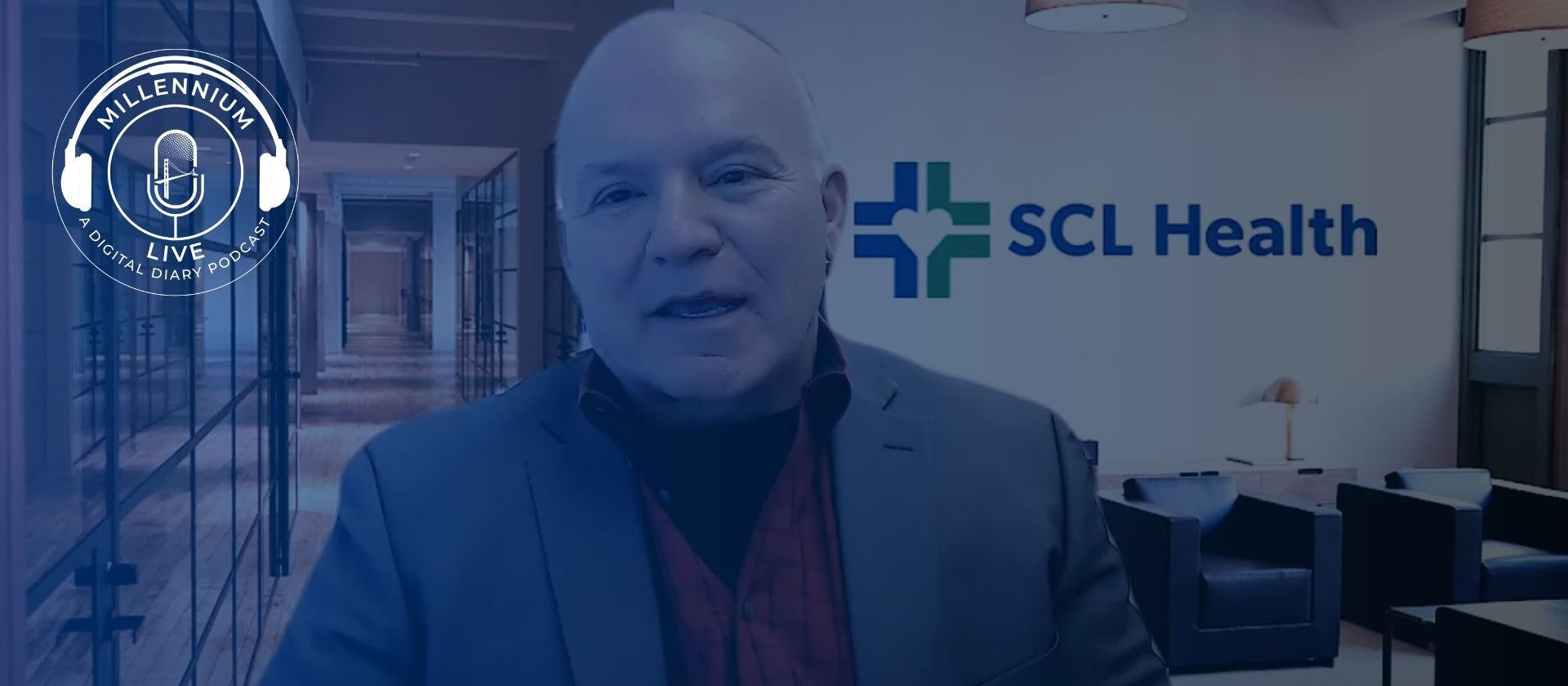
Healthcare Payers & Providers Assembly with Keynote Craig Richardville

Our Payers & Providers will be joined by Keynote Craig Richardville, SVP, CIO & Digital Officer at SCL Health and member of The Millennium Alliance Advisory Board. His responsibilities include leading all aspects of the health system’s information technology and digital services strategy, operations, information security, and analytics assets in leading the system’s digital transformation and information automation. Previously, he served as owner and president of Richardville Consulting LLC, and served as Senior Vice President & Chief Information and Analytics Officer at Atrium Health for more than 20 years where he transformed the growing company into a national leader in the effective use of technology, data, and digital services as a differentiator. Craig notably earned the prestigious 2015 John E. Gall, Jr. National CIO of the Year Award in healthcare. Mr. Richardville was also awarded in 2017 the Charlotte CIO of the Year and in 2020 Colorado CIO of the Year for his continued impact using technology and digital assets.

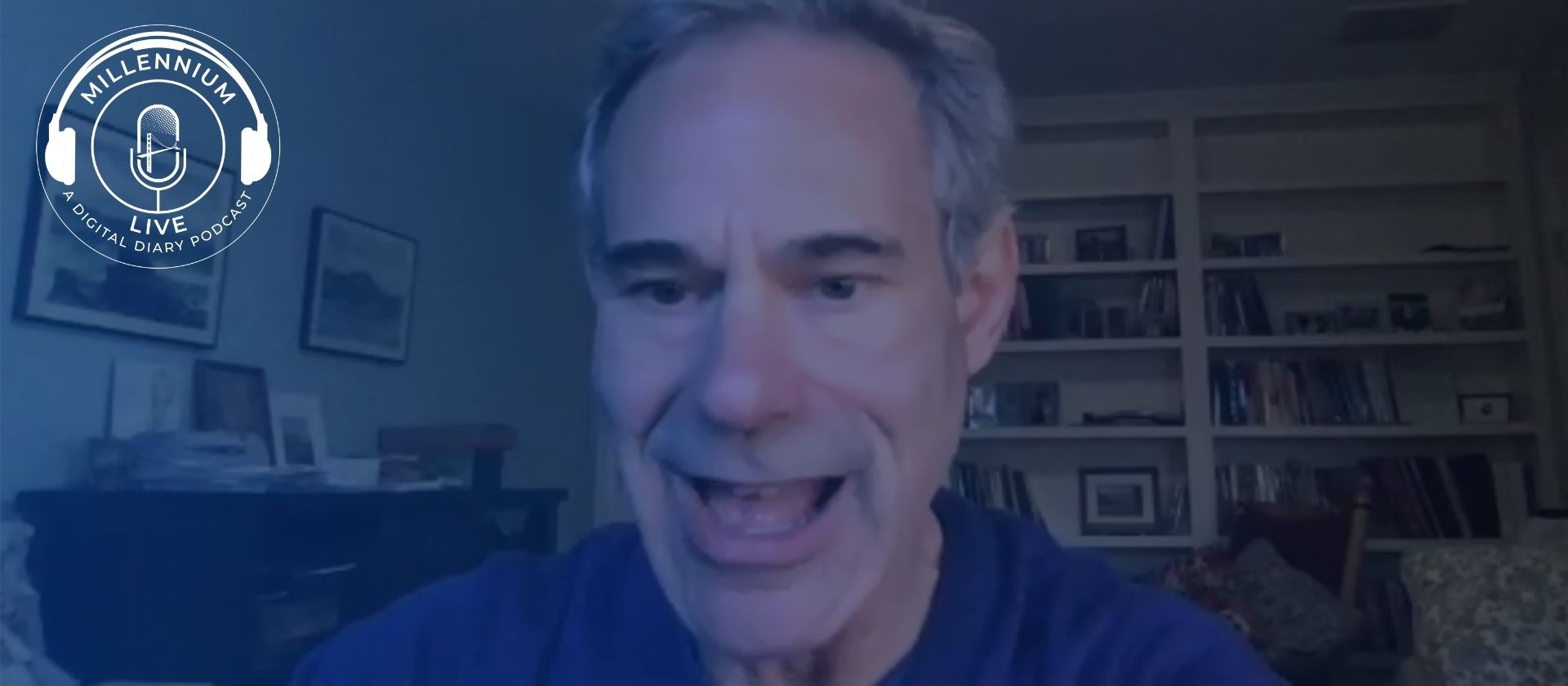
David-Edelman-keynoteDigital Healthcare & Patient Experience Assembly with Keynote David Edelman

The Digital Healthcare & Patient Experience Virtual Assembly kicks off with our Keynote David Edelman, the Former CMO at Aetna and present-day consulting leader in Digital Transformation and Marketing Strategy. David Edelman has built a global reputation, grounded by his development of foundational marketing concepts such as “The Customer Decision Journey,” and “Segment-of-One Marketing.” He has been repeatedly recognized by Forbes as one of the “Most Influential CMOs in the
World,” and by AdWeek as one of the “Top 20 Marketing and Technology Executives.” His writing and work has attracted over 1.2 million followers to his LinkedIn blog. For the last four years, David served as Chief Marketing Officer of Aetna, now part of the $200B healthcare giant CVS Health, and ran its “Digital First” enterprise modernization program. He drove a broad transformation at Aetna, rebranding the 166 year-old company, implementing real-time analytics, and building agile operations.

Healthcare Innovation Starts Here

Digital Transformation involves ongoing exploration by today’s leaders, and our best advice is to not trek the journey alone. Our Digital Healthcare Transformation Virtual Assembly coming this December is set to be a groundbreaking opportunity for leaders to virtually connect on the current trends & challenges the industry is facing amid COVID-19. Our assemblies are virtual for the time being, but you can still expect the same high-level discussion & networking as a Millennium onsite experience.

We know what you’re thinking…

This isn’t Your Run-of-the-Mill Zoom Conference.

Our Founders, like many C-Suite executives today, became disillusioned by the slew of healthcare webinars, summits and events on the market today that promised “world class networking” opportunities with leading industry decision-makers. In reality, they found that these events had antiquated & impersonal discussion topics, and quite frankly, it seemed like just about anyone could attend the event.

We’re serious about executive education. Our assembly agendas are data-driven and curated from our industry-expert Advisory Board, a group of 26 industry movers and shakers with a proven record of digitally transforming organizations from the ground-up. Our topics of discussion reflect the most poignant & relevant challenges the industry is facing at the time of the assembly. Our goal is to change the way leaders look at executive education, and you won’t find this level of content, discussion, and networking anywhere else. We’re on the journey to digitally transform the patient experience industry with you.

Interested in joining? Reach out to us at info@mill-all.com to RSVP for the virtual assembly!

How Passive Optical LAN Can Remove 84 Points of Vulnerability from Your Network

Passive Optical LAN can drastically improve the physical local area network’s defensibility, enabling consistent protection policies that are centrally managed – all while reducing human error and increasing network stability.

The greatest proof of Optical LAN’s ability to tighten an enterprises’ cyber security posture by reducing a companies’ attack surface, is best illustrated by how OLAN reduces network points of vulnerability.

For example, let’s start with a copper-based legacy corporate LAN design that connects 4,032 Gigabit Ethernet from eighty-four 48-port workgroup switches and one distribution/aggregation switch. The process to harden this enterprise network to ensure secure operations would need to address:

Go here for the full report from Tellabs

#Millennium Live & Doctor.com on Healthcare’s Pivot During COVID-19 & Telemedicine CX

Mara Kaufman, Chief Customer Officer at Doctor.com, joins us today on #MillenniumLive. While so many industries have felt the impact of COVID-19 indirectly, their clients have been on the frontlines fighting the pandemic while also dealing with business repercussions. Kaufman explains the evolving needs & concerns of the healthcare industry and walks us through the innovations on the rise during this time. She also adds insight into how healthcare leaders can create a better telemedicine customer experience.

Watch the video interview below, or go here for the podcast episode.

About Doctor.com

Doctor.com was founded in 2012 with the mission of helping healthcare organizations deliver a better customer experience at every step of the digital patient journey. Healthcare practitioners today struggle to thrive in an increasingly digital and consumer-driven world, lacking expertise or effective solutions. And, as patients, the care-seeking experience is often frustrating and arduous. By introducing a “customer experience” mindset to organizations — one that is value-based, modern, and efficient — we can help evolve the healthcare industry.

We built our technology from the ground up to function as a holistic and robust customer experience platform — not another point solution. Today, we have the only offering in the industry that seamlessly integrates web-wide listings management, reputation insights, universal online scheduling, patient communications, provider data warehousing, and telemedicine. These services are enhanced by 50+ integrations with the most prominent healthcare directories, search engines, social media platforms, and EHR/PM systems. As a result, thousands of healthcare organizations of all sizes have been empowered by the Doctor.com platform to enhance their digital presence and credibility, increase patient trust, and grow their business.

Go here to learn more 

Crisis-Tested IT Teams Accelerate Digital Agility Plans

The widespread lockdowns imposed by municipal and state governments to curb the COVID-19 pandemic prevented nonessential workers from going into the office and required IT organizations to support a rapid pivot to digital business virtually overnight.

A new survey brought to you by Comcast Business, reveals that IT decision-makers who were already engaged in some stages of digital transformation (DX) believe that their investments left them better prepared and able to cope with widespread disruptions of normal business operations.

Few could have anticipated the impact of the coronavirus. Businesses needed to navigate new work environments and manage changing customer expectations. The survey indicates that the crisis exposed some vulnerabilities in digital agility even for companies whose DX efforts are mature. As a result, many organizations have begun to rethink their priorities and plan to increase their digital agility in areas such as supply chain resilience, application management, and accelerated cloud adoption. Another outcome is that IT leaders will likely have a larger say in how to move forward, as a large majority of the respondents indicated that the crisis has elevated the position of IT at the executive decision-making table.

Go here for the full report

David Sable on The Transformation Equation

As originally published by David Sable on Linkedin. Subscribe to the newsletter!

I can’t tell you how many clients have approached me in the past, asking for help to “transform” their company. But what does that really mean? And how useful is such an endeavor if you can’t accurately measure a company’s transformation? Tune into to this week’s video edition of my newsletter, “Imagine,” to learn about the equation I created and use to calculate a client’s “transformation”—and how you can use it too.

#MillenniumLive & Panopto on the Power of Video Communication, Automation & AI

Now more than ever, businesses are utilizing the power of video, a trend that has only accelerated in 2020. Eric Burns, Chief Executive of Panopto, joins #MillenniumLive to discuss making video intrinsically searchable by applying automation & AI, as well as how video has become the leading core communication tool, especially in a world where everything has gone virtual. We also discuss what the future of video may look like in another decade.

Watch the video interview below, or go here for the podcast episode!

About Panopto

At Panopto, we believe that video can have a transformative effect on learning. So we build a video platform that helps businesses and universities improve the way that they train, teach, and share knowledge. Today, we have more than 150 employees in six offices around the world. We serve an audience of over 5 million end users. And we’ve received industry recognition for our innovation, our rapid growth, and our company culture. For business, Panopto is a secure, searchable portal for managing and sharing all your business videos. With Panopto, you can professionally capture presentations, demos, classes, and events, and your employees can instantly find any relevant moment in any recording and play it back on demand. It’s the easy-to-use, all-in-one, enterprise video platform for all your training, communications, and knowledge sharing needs.

Go here for more information!

#MillenniumLive Talks All Things eCommerce with Dentsu Aegis Network

In this episode, #MillenniumLive is joined by Jon Reily, Global Chief Strategy Officer at Dentsu Aegis Network. We discuss all things eCommerce: the disruptions, takeaways, the overall effects as a result of COVID-19. We also talk about how the travel, grocery, and healthcare industries are moving forward, and the impact of Generation Z as they become the largest consumer cohort.

Watch the video interview below, or go here to listen to the podcast episode. 

About Dentsu Aegis Network

Global reach combined with end-to-end business solutions.

Total Commerce goes beyond digital business transformation, and instead recognizes that commerce has no beginning and no end from the real to the digital world. Thanks to technology, consumers no longer “go shopping” but are rather “always shopping.” Brands need solutions from acquisition all the way to post-purchase loyalty, and everything in between in order to be successful in this new world.

Tapping into the capabilities of our award-winning agencies – Carat, DEG, Isobar, iProspect, Merkle and dentsumcgarrybowen – we provide media, brand creative and eCommerce experience, to strategy and analysis, customer relationship management and fulfillment.

With 3,500 people in 85 world-wide markets across six continents no other company has the scope and breadth of Dentsu Commerce. Brands of all sizes must have ability to fight and win in the new digital world of Total Commerce and Dentsu Commerce is the partner to make that happen.

Get in touch with our team for a consultation, insights and more: dentsu.commerce@dentsuaegis.com.

David Sable Offers Some Insight on the Past, Present, and Future of New York

As originally published by David Sable on Linkedin. Subscribe to the newsletter!


New York: The City that Never Dies


Dear Readers,

Your assignment, should you choose to accept it, is to return to work in a so-called dying city. Brave the violence-ravaged streets to go anywhere. Use public transportation at your own risk. Scavenge for food and other necessities. Live in fear and loneliness, as the city continues to empty. Work in isolation and venture forth at your own peril. This message won’t self-destruct…you will be gone first, one way or another.

Who in their right mind would accept this assignment? Not even Tom Cruise—the movie wouldn’t last long enough for him to do any wild ass-stunts.

In fact, we have probably seen this scenario in more apocalyptic movies and zombie TV shows than we can count.

Yet, some would have you believe this isn’t the plot from yet another B-minus movie or the latest Netflix mini-series, but rather the current state of New York City. A city that, some have claimed, is virtually dead to the world.

On the one hand, I could fulfill my lifelong action hero fantasy by leaning into the role and embrace the terrible situation posited by so many pundits, commentators, experts and analysts. OR, I could embrace my inner Clark Kent and tell you that it’s all crap. New York City is alive, recovering, and actually pulsing with energy just waiting to be unleashed come fall.

As any of my dedicated readers know, I love to find historical parallels from which we can all learn. As such, I researched other times that NYC was deemed “dead,” “never to return.” And let me tell you, I lost count of the number of times throughout history that our dear city was claimed to be so.

Let’s take an obvious, albeit tragic example: After 9/11, many believed that Lower Manhattan would never recover. Certainly, after the financial collapse of 2008, when “eternal” titans like Bear Stearns and Lehman Brothers collapsed, people thought Wall Street was caput.

And further back now…what about when the British captured New York City in 1776, imposing Martial Law and spending the next seven years looting and plundering? The Great Market Crash of 1929? It brought New York city so low that it took 10 years and the New Deal to get the state, and rest of the country, back on track. The New York City draft riots of 1863? Not even one of the largest civil and racially charged urban disruptions in American History could destroy the city.

Let us consider a more resonant parallel to our times: The 1918 Flu Pandemic, or Spanish Influenza, which tore through the crowded streets and tenement buildings of New York, killing more than 20,000 people in the city alone. The city not only survived 1918 but grew to thrive in the roaring 20s before collapsing again in the 30s, and eventually, bouncing back yet again.

Considering these many examples, calls to mind a well-known, often-misquoted anecdote involving Samuel Clemens, known to most as Mark Twain. The true story goes as follows: When a New York newspaper reached out to the author, asking him if he was on his deathbed, Twain responded, “I can understand perfectly how the report of my illness got about, I have even heard on good authority that I was dead, [however] the report of my death was an exaggeration.”

So, too, New York City, where Mark Twain spent so much time and wrote so many beloved texts—a City he loved to poke at, make fun of, and target his wicked wit—of that city, he wrote:

“Make your mark in New York and you are a made man” 

Which, of course, calls to mind the famous Fred Ebb lyric (song by John Kander):

“If I can make it there, I’ll make it anywhere”        

In all honesty, my wife and I left the City during the lockdown, spending 6 months with our children and grandchildren (the equivalent of 3 summers) at our summer getaway. But we are back.

We are back and optimistic, more so, energized, because New York City is energized. Sure, she’s limping and still bears her battle wounds, but if history has taught us anything, it’s that the City will return…different, but greater in so many ways.

I write this because the questions raised by Mark Twain’s letter reverberate today. Think about one newspaper report that started the rumor of his early demise…now fast forward to today.

That one mistaken, ill-informed, or even reckless newspaper has been replaced by a 24-hour news cycle, social media, a horde of politicians either spreading or claiming, “fake news,” warring politicians, special interest groups, chatterers, experts and, of course, the ever-present trolls.

Meanwhile, in NYC; we walk the streets, sit outside in restaurants, go to stores, take the subway, run the trails, bike the paths, see friends (in a socially-distanced manner, of course), shop, attend religious services in new and safe ways, picnic at the parks, and even go into the office.

The streets are not empty. The sidewalk restaurants are full. And every day, more and more people are returning to the use of public transportation.

Sadly, many small businesses are hurt—some beyond recovery—but there are many initiatives at work to save those that are still salvageable, and are helping new ones emerge…like Cinch Market, which has started a shop-local movement, “Brooklyn Not Bezos.”

New York is a city of ingenuity. I don’t want to give you a trite resilience talk, but it really is a city that makes things work—a city where the plans for the new World Trade Center Towers were conceived, even while many predicted that no one would ever return there. And return we did. In fact, it’s where my office is currently located.

Bottom line: if this were a marketing brief (and it is…in a way), I could give you no better insight than to quote the late, great Dorothy Parker:

“London is satisfied, Paris is resigned, but New York is always hopeful”

And the amazing John Steinbeck who got it just right:

“New York is an ugly city, a dirty city. Its climate is a scandal, its politics are used to frighten children, its traffic is madness, its competition is murderous. But there is one thing about: Once you have lived in New York and it has become your home, no place is good enough”

And there you have it.

I don’t mean to be a New York jingoist. I am simply setting the record straight, so you can market appropriately.

When you can, do visit again…we’re keeping the lights on. And do spread the word.

What do you think?

#MillenniumLive with Darktrace on Digital Transformation & Safe Enterprise Solutions

In this week’s episode, #MillenniumLive is joined by Marcus Fowler, Director of Strategic Threat at Darktrace. 2020 has been a year full of changes and uncertainty. Marcus has some important insights to share on how security teams are keeping up with the massive digital transformation and securing all the new platforms that have arrived with remote work environments. Marcus is here to explain why DarkTrace is the unique solution in handling cyber threats and keeping the enterprise safe.

Go here to listen to the podcast episode

About Darktrace

Founded in 2013 by mathematicians from the University of Cambridge, Darktrace was the first company to develop an AI system for cyber security. The company was seed-funded by Invoke Capital, a specialist technology investment fund headed by Dr Mike Lynch OBE, and the Invoke team was instrumental in working with the founders in the early days.

Darktrace founders also include cyber security experts from government intelligence backgrounds, united in their mission to fundamentally transform the ability of organizations to defend their most critical assets in the face of rising cyber-threat. Darktrace’s pioneering technology, the Enterprise Immune System, applies AI to the cyber defense challenge for the first time, detecting cyber-threats that existing, legacy systems cannot. It quickly became clear that the technology was powerful enough to identify a diverse range of threats at their earliest stages – including insider attacks, latent vulnerabilities, cloud-based threats and even state-sponsored espionage.

In 2016, Darktrace’s leadership in AI was reinforced with the launch of the first-ever autonomous response technology, Darktrace Antigena. This innovation allowed the Enterprise Immune System to react to in-progress cyber-attacks in a highly precise way, giving security teams the time they desperately need to catch up. When WannaCry ransomware attacks hit hundreds of organizations in 2017, Darktrace Antigena reacted in seconds, protecting customer networks from the inestimable damage. In November 2017, the company announced a new business unit, Darktrace Industrial, dedicated to fighting threats in industrial and SCADA networks, building on a strong base of customers that use Darktrace AI to protect critical national infrastructure and operational technology.

Darktrace is headquartered in San Francisco and Cambridge, UK, with 44 offices globally and over 1,300 employees. It is privately owned, with investors including KKR, Summit Partners, Vitruvian Partners, Samsung Ventures, TenEleven Ventures, Hoxton Ventures, Talis Capital, Invoke Capital and Insight Venture Partners.

Go here to learn more DarkTrace


Secure Your Network and Stop Cybercriminals from Capitalizing on a Crisis

As businesses adapt to support a primarily remote workforce, they must also secure network connections to protect their people, assets, and customers from cybercriminals who consider the global circumstances an opportunity to prey on emotional and technical vulnerabilities across distributed work environments.

When businesses around the world changed the way they worked in response to COVID-19, cybercriminals ramped up their efforts to corrupt corporate networks with increased phishing, spoofing, distributed denial of service (DDoS), malware, and other malicious attacks.

Cybersecurity professionals must stave off almost constant attempts to breach network security in normal times. During a global crisis, the efforts from cybercriminals multiply exponentially as they seek to expose technical vulnerabilities and play on people’s emotions. We need to look no further than our own data to see the prevalence of hacking attempts — about 87% of the 1.5 billion emails Comcast Business processes every year are some sort of phishing attempt to lure people to click through to a spoofing site where malware would download to their device. Since lockdowns began in mid-March, we’ve seen those numbers climb even higher.

Go here for the full report from Comcast Business