David Sable Shares How Clubhouse was Built on the Shoulders of Giants—and Why it Matters

As originally published by David Sable on LinkedIn. Subscribe to the newsletter!

Clubhouse is booming and Twitter and Facebook have taken note and are chasing after it.

For those unfamiliar with this most recent (and hippest) of social media tools, allow me to borrow a description shared by the New York Times last month:

“[Clubhouse is a] social networking app that lets people gather in audio chat rooms to discuss various topics, whether it’s sports, wellness, art or why Bitcoin is headed to $87,000. Rooms are usually divided into two groups: those who are talking and those who are listening (participants can see a list of everyone who is in a conversation, and the numbers sometimes run into the thousands). Unlike Twitter, Clubhouse is a closed, hierarchical platform: A moderator oversees discussions and has the ability to let someone chime in or to kick out the unruly. In addition to the ‘clubs’ sorted by topic, two or more users can join together and start their own chat room.”

Audio-only programming has been on the rise with the ever-growing popularity of Podcasts and their commercialization, together with channel-like content aggregation.

Lest you think this new concept of audio was sprung upon us ex nihilo, allow me to deconstruct its creation and popularity.

It’s actually a fascinating study in de-evolution—and instructive in understanding how to play and conquer this seemingly new medium of engagement.

Let us go back a century, to November 1920, when the first commercial radio station emerged in Pittsburgh USA. Its inaugural broadcast, interestingly enough, was to report the results of the Presidential election between Harding and Cox.

Back to this narrative…

What was created for news and information, soon learned how to entertain and educate. Hatemongers like Father Coughlin became adept at spewing racist vitriol on radio, amassing 30 million listeners at his height in the 1930s—far more than most of the Twitter followers of his spiritual descendants today.

And then came WWII, when Winston Churchill taught the world just how powerful a positive force radio could be, as Franklin Roosevelt and others followed suit.

Radio was a commercial success, used by consumer brands and services to sell their wares. And when highways expanded, and the world took to the road, drive time radio became one of the most important communication channels of its time. Keep that in mind. Don’t lose the thought…you’ll see why in a few paragraphs.

Hold on to the following as well: what for my parents was an experience that needed a physical platform and a plug-in power source, became, for my generation, a statement of freedom and individuality as transistor radios, powered by batteries, proved an important lifestyle accessory, as DJs (the critical influencers of the day) told us what music was hot and who was doing what.

Then the Digital Age hit. The Internet, “immersive experiences,” (ask someone my age about listening at night with an earphone under your covers, if you want to know about subversive immersive), and of course, the everything-else-killer: video. After all, why just listen if you can watch?

But here is the thing…100 years ago, we started with radio and ended up streaming blockbuster movies onto screens in our homes. And now we are going from those screens back to radio. Contrary to what communications prophets of the late twentieth century may have believed, cinema and radio are complimentary, symbiotic, existing side-by-side as opposed to struggling against one another, and they have both been successful because of differing use cases.

Your smartphone is the super-evolved transistor radio of my youth—you carry it everywhere, it’s a lifestyle accessory, you can use hi-def headphones/AirPods (not like the single earbuds we once had), and yes, you can watch video, but you can also talk, interact, groove to music, shop, etc. And yet, audio, as in ‘radio,’ is still clearly an important and powerful part of its foundational DNA.

Drive time, so critical in my youth, has expanded with walking/ running/ shopping/ chilling/ commuting, making it a 24-hour on-demand opportunity that exponentially expands listener engagement.

And much like audiences in the UK discovered in 1924, when a local radio station began having people call in, “listeners enjoyed the novelty of hearing their own voices taking part.” So successful was it then, that the Post Office, who controlled the phone system, had to intervene as radio call-ins nearly shut down the entire grid. Sound familiar?

Why do I tell you all of this?

I don’t believe we will fully use or develop Clubhouse, or a platform like it if we don’t understand its true origins.

Better yet, think on this: in a world where we are so sure that everything has to be released at once, on-demand, when we want it, Clubhouse operates like old-fashioned radio broadcast.

You have to watch it in real-time. You must opt-in, listen before they let you talk, and—my favorite thing—the session ends at its advertised time.

Clubhouse, like podcasts and streaming radio, defies the DIGIBABBLE pundits at the same time it makes brilliant use of digital technology. To make it work, you really need to understand people and their motivations, not unlike 1924 England, updated for our digital world of today.

“The Era of Audio Creators Has Arrived,” a New York Times piece by Taylor Lorenz, tells the story of Clubhouse and the businesses it’s spawning—a good read to get grounded in where it’s all headed.

Yet, I can’t help but wonder, as I muse on the amazing past that brought us here, the following quote which concludes Lorenz’s article:

“Part of what we want to do is not just create a model of how audio can be transformed…but also make a push forward for creator-driven culture so that this culture isn’t being shaped by the platforms and technologists, but the artists and creatives and talent.”

I wonder what Winston Churchill would say to this, or the original radio jockeys who first reported on the Harding election, or the first listeners who participated in call-ins, or the brands that built their businesses…or the on-air theaters and concerts that once invaded people’s imaginations with early audio…

Ex nihilo? Don’t think so.

Arrived? More like finally returned.

Although Thomas Edison believed that, “the radio craze will die out in time,” Hallie Flanagan, a theatrical producer, director, playwright, and visionary once said…Listen:

“The power of radio is not that it speaks to millions, but that it speaks intimately and privately to each one of those millions.”

Kudos to the founders of Clubhouse for tapping into this truth. A word to the wise: let the DIGIBABBLE Brigade think they created audio, get your hands on some of the most creative work ever done, even if it was so last century, and beat them to the punch.

What do you think?

P.S. a little gift for all

Your Assembly Recap: Transformational CMO & Retail

Contributed by Katie Perry and Elizabeth Radziul

The Transformational CMO & Retail Virtual Assembly wrapped up last week, and it was a hit. Our C-Suite members discussed digital marketing strategy, changing consumer behavior, and the trends that will stick around in 2021. 

In case you missed it…

Lessons Learned from Our Keynote Speakers

On day one of the Assembly, Millennium Alliance Advisory Board member and Co-Founder and CEO at Bell + Ivy, Cynthia Johnson, sat down for a fireside chat with Karina Kogan, Senior Vice President, Head of Global Product Marketing at Peloton. They discussed Peloton’s journey to turning the COVID-19 crisis into an opportunity for change. When the country shut down on March 15, Peloton had to immediately pivot. They applied Peloton’s “members first” mentality by launching their 90 day free trial on the Peloton app to promote wellness during an unprecedented time. Karina went on to explain how this led to exponential growth in membership and their following. The challenge at first was awareness, but through word of mouth and the free trial, Peloton raised enough awareness for the app to accelerate growth for Peloton, paving the way for future digital transformation.

karina kogan keynote

Day two began with a Keynote Panel led by Dawn Lerman, Professor of Marketing and Executive Director, Center for Positive Marketing, Fordham University on the disappearing role of the CMO. Panelists included Ashish Agarwal from Humana, Michael Challinger from Wilton Brands, Carolyn Pollock from Tailored Brands, Helen Vaid from Yum Brands (Pizza Hut), and Samantha Wu from Facebook. The consensus was that the CMO role is not going away completely, but it is changing significantly. As brand loyalty and consumer relationships become more important and digital and eCommerce grow, the CMO must work closely with Chief Brand Officers, Chief Experience Officer, Chief Digital Officer, and other executives to act as an advocate for the consumer. 

Engaging Discussions with C-Suite Executives and Thought Leaders

Jason Lambert of Anheuser-Busch InBev led a workshop on digitally transforming centuries-old companies. Customer journey research is essential when undergoing digital transformation. It is also important to eliminate pain points and elevate positive points of the traditional customer experience model when creating a digital model.

Next, Lauren Beckstedt, Chief Marketing Officer at Brunswick Corporation discussed how digital experience can drive conversion. She made the point that consumers are willing to pay more for convenience and ease, which is creating waves in the luxury space. Nurturing engagement and leveraging data in your cross-business commercialization is the key to delivering stronger conversion. 

Jaina Wald, Vice President of Marking at Puratos Corporation discussed how consumers have had many behavior shifts amid COVID-19. Jaina and her colleague, Meg Schneider, Associate Manager of Insights & Training, shared how emotions played a large role in these shifts. Social isolation inspired creativity, but in turn changed how people purchased, especially in the baking industry. There was a change in generation brand dependency and a boom in eCommerce as technology advanced. Additionally, consumers still want to indulge, but in small ways such as a donut. All in all, consumers want brands that care about social movements. 

For the next workshop, Edwin Wong from Vox Media talked about how journalism will play a role in the rebuilding of society as we know it. While media is polarized, most people believe that we are more similar than we are different. The trouble is figuring out now to navigate away from “polarizing media” and create trustworthy journalism. He notes that brands play a role in shaping these narratives, and brands that stand for social responsibility build long-term equity, especially among the younger generation. Consumers expectations for change are increasing, and brands that can keep up will be successful.

The final session of the Assembly was led by Raghu Iyengar, Professor at The Wharton School. He tackled the topic of subscription programs, which include media subscriptions, replenishment subscriptions, curation subscriptions, and exclusive benefits subscriptions. For this session he focused on premium benefits subscriptions, which offer exclusive benefits to members, but also sell to non-members. Some factors to consider are the causal impact of a program on behavior, heterogeneity of customers, and which benefits have an effect on business. 

What’s New From Our Solution Providers?

Sutherland

Donna Tuths from Sutherland led a workshop on online reviews and consumers’ trust in reviews as opposed to traditional advertising. Reviews can provide insights on how to improve your business, and good reviews can lead to increased sales. Some ways to make the most of your customer reviews include showing reviews and ratings on your product site, prioritizing review requests for products with a low volume, and responding and engaging with customers on their reviews. 

Iterable

Garin Hobbs from Iterable discusses Customer Loyalty and Personalization from the execution side, which involves bringing together the perfect pairing: customer and experience. Customers are more connected and cognizant than ever. They are exploring, judging, and expecting more, so brands must learn how to deliver. Four areas of focus are required to connect with the customer and increase loyalty: the right person, the right message, the right time and the right preferences. He notes that brand affinity should dictate messaging in order to deliver the personalized messages that will increase loyalty.

Fizz

Ted Wright, CEO of Fizz, led a discussion on the benefits of “word of mouth” marketing. 15% of every conversation includes a branded product or service, and conversation is what drives sales in North America today. It is important to find brand advocates, or better yet, have them find you. Advocates like to try new things, share stories with friends, and are intrinsically motivated. They engage in conversations that are relevant and efficient, and are drawn in when brands tell meaningful stories that are worth sharing.

The Winner of The Millennium Mission Prize Goes to…

Sabrina Cherubini!

The Millennium Alliance will donate $1,000 on behalf of Sabrina Cherubini, VP Marketing, Customer Strategy, Ann Taylor & LOFT, to the charity of her choice, Feeding America. This award is part of The Millennium Alliance’s new initiative, The Millennium Mission, in which we donate to charities such as AdoptAClassroom.org, Feeding America, The Miracle Walk, the U.S. Coronavirus Emergency Response, and others on behalf of the most engaged attendee for each event. We are excited to make a donation in Sabrina Cherubini’s name!

Don’t miss out on the next Marketing & Retail Assembly! Join us on May 25th for our Transformational CMO & Retail Virtual Assembly. Go here to RSVP.

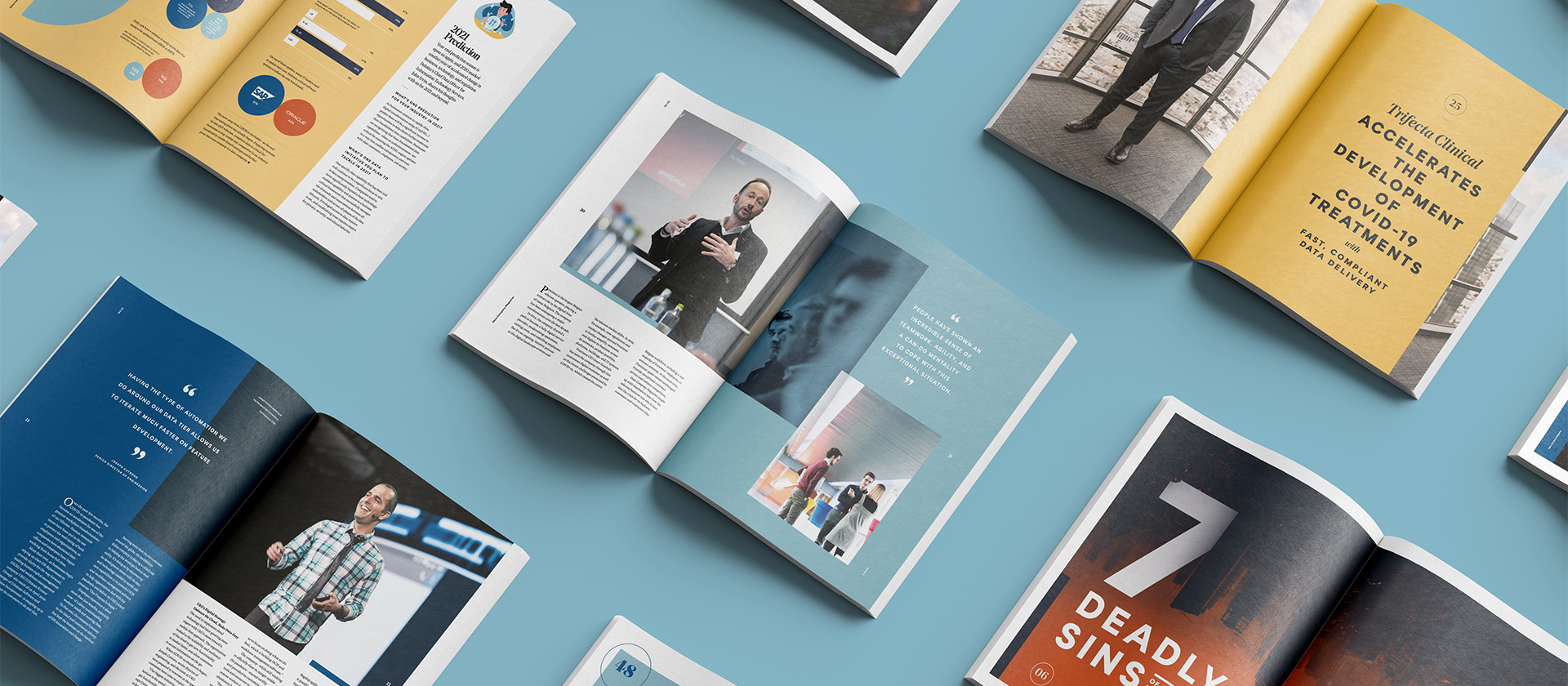
Zooming Into 2021: The Digital Diary E-Magazine

We are thrilled to share that the latest edition of the Digital Diary E-Magazine, “Zooming Into 2021: Predictions & Insights from Today’s Leaders”, is out now!  This edition focuses on what we’ve learned from the past year and what is to come in 2021. Thought leaders and industry experts continue to pave the way to digital transformation despite all of the disruption the Cybersecurity, Digital Enterprise, Healthcare, & Marketing industries have faced.

In this E-Magazine, our Thought Leaders share their insights and predictions for the year to come, Sharen Jester Turney, Former CEO of Victoria’s Secret answers your questions, we chat with Data Innovator of the Year, Craig Brabec, David Sable shares his words of wisdom in a disrupted world, Denise Lee Yohn discusses brands to watch in 2021, and more.

Go here to download the E-Magazine

#MillenniumLive with our Data Innovator of the Year, Craig Brabec!

The Millennium Alliance announced its first Data Innovator of the Year Award at the Digital Enterprise CIO & Data Transformation Virtual Assembly and it belongs to Craig Brabec, Vice President, Chief Data Analytics Officer at McDonald’s. This #MillenniumLive episode features Craig and our Advisory Board member, Sean Ammirati, discussing Craig’s career in technology, data-driven pivots in the midst of COVID-19, and the latest developments in artificial intelligence & data science. Craig also answers questions from our C-Suite members on how he’s building his team in the midst of a competitive climate for data scientist recruitment, how data fits into his initiatives for innovation, and what excites him about the future of digital enterprise.

powered by Sounder

Listen to the podcast episode on Spotify or Apple Podcasts.

About Craig Brabec

As McDonald’s Chief Data Officer, Craig is helping to define and infuse data across the global enterprise. He is creating the roadmap to identify the team, technology, process and culture change required for enabling enterprise data transformation, establishing best-in-class data strategy and governance and evangelizing these changes throughout McDonald’s.
Most recently, Craig was the Director, Global Data Insights & Analytics within Ford Motor Company. In this role, Craig provided the executive office, product development, manufacturing, global supply chain, finance, human resources and business units with data insights to enable better decision making for the enterprise.

Craig has more than 25 years of experience working in corporate strategy and data analytics as well as manufacturing, construction, IT, supply chain and management consulting. He has a proven track record of driving value creation, growth and business performance. Prior to Ford, Craig was the first Senior Vice President, Data Analytics at McKesson Corporation, leading analytics for the Fortune 5 company worldwide.

Craig also served as the first Chief of Analytics for Caterpillar. Leadership at Caterpillar included roles in strategy, IT, 6 Sigma, and supply chain. Prior to that, Craig was part of Deloitte Consulting’s Strategy and Operations practice. Craig also served as a Lieutenant in the U.S. Navy Civil Engineer Corps.

Craig serves on professional councils focused on advanced analytics and digital transformation. He is an advocate and mentor for the advancement of STEM programs across the globe, including USFIRST Robotics. Craig has an MBA from the University of Illinois, a BS in Industrial Engineering from Purdue and is a licensed professional engineer. Craig and his family currently reside in Michigan.

Discover the Most Current Trends in Data and Analytics: Qlik Executive Insights Center

The Qlik Executive Insights Center is an exclusive community where data-driven executives like yourself can discover new trends and ideas to help you accelerate your business. Featured this month is a Data Brilliant podcast episode with Novartis on how to deliver on-demand data, a blog on why active intelligence is the key ingredient for a successful digital transformation, and a Millennium Alliance video with Qlik CDO Joe DosSantos on adapting to the digital new normal. Valuable new resources are frequently added, so be sure to bookmark this site and check back often!

Click here to visit the Executive Insights Center

Older Adults Can Use Tech, But What Happens When the Tech is Ineffective?

As originally published by David Sable on Linkedin. Subscribe to the newsletter!

The digital divide seems to be getting bigger and bigger. Worse, it has created so many worrying faults that it’s starting to look like one of those disaster movies starring The Rock.

First, we have the digital economic divide. Then there is the digital racial divide. And, finally, The Plague has brought into renewed focus the digital age divide. While I could create a powerful Venn diagram of the three digital divides, as they all intersect on one plane or another, each is problematic on their own as well.

One of the issues in looking at the digital age divide is that for many, 70 is the new 50 and onwards. As the population ages, what constitutes old? Honestly, I used to think that 65 was ancient, and now that I’ve passed that age, I don’t see “elderly” anywhere in sight.

Many older adults (and here I’m talking 80+), have solid digital skills, if for no other reason than that it gives them access to their children and grandchildren. So, while they may not be able to create immersive digital experiences, they are adept at email, messaging, FaceTime and Facebook.

The truth is, of course, that even with non-smartphone capabilities, including basic text messaging, older adults can connect to their loved ones and critical services, and are no worse off than many in the developing world…with one key, and sadly, defining exception.

In the developing world, there is a focus on “work arounds,” or simple hacks that use “dumb” tech to solve problems. All of our admired (but often loathed) so-called Tech Giants (Facebook, Google etc.) have created solutions using SMS and basic phones, even as they continue to experiment with more sophisticated tech, launching balloons, drones and satellites to provide broadband—and to stir up FOMO amongst potential users.

In many developed countries, the age divide is less a symptomatic lack of wide broadband coverage, access to electric power sources or money for hardware, than it is a matter of, “I just don’t have the energy or intuitive knowledge to battle my way through screen after screen of crashing and contradictory user interface.”

The young use tricks of the digital trade, while the old spend hours waiting for spinning circles to still themselves.

While plenty of seniors have access to better tech, they simply don’t have the wherewithal or skillset to use it to its fullest. And by the way, this goes for public messaging and broadcasts as well. So many campaigns aren’t seen by the “old” demographic, as they are not utilizing the channels that purport to reach them.

The digital divide, then, as far as the oldest cohort of our audience is concerned, is more about UI, the simplicity of completion, than it is about lack of access to tech.

Bottom line, the people who need access to certain online platforms the most, say, websites to sign up for the COVID-19 vaccine, have the hardest time finding, navigating and engaging with the pathways that will get them there.

I don’t believe I’m overstating here when I say that it’s an issue that can have tragic consequences. Shame on us.

With all the money we invest in development and “disruption,” with all the time we devote to getting pizza delivered more quickly (my readers know my feelings on this), with all the brainpower we invest in providing yet another way for corporate teams to collaborate online (don’t get me started on this one), how is it that we haven’t provided a simple solution for those who desperately need the vaccine but cannot figure out how to get it?

We have become so jaded by our own tech skills and our ability to make everything more sophisticated (read: complex), that we have lost the drive to make the complex simple. And nothing, going forward, could be more important.

There are many huge systematic faults in the digital divide that will require retooling of much more than tech to fix. But the digital age divide can be bridged by purposeful thinking and empathetic ingenuity. It is not that older people are too senile or deficient to use digital resources and other tech, but rather, we, the younger folks, have failed to create a system that people of all ages can operate and navigate.

Listen to the amazing Frances McDormand:

“I think that ageism is a cultural illness; it’s not a personal illness”

And there you have it. Fix the culture, close the divide.

Flavio Aggio of WHO to Keynote our CISO Assembly!

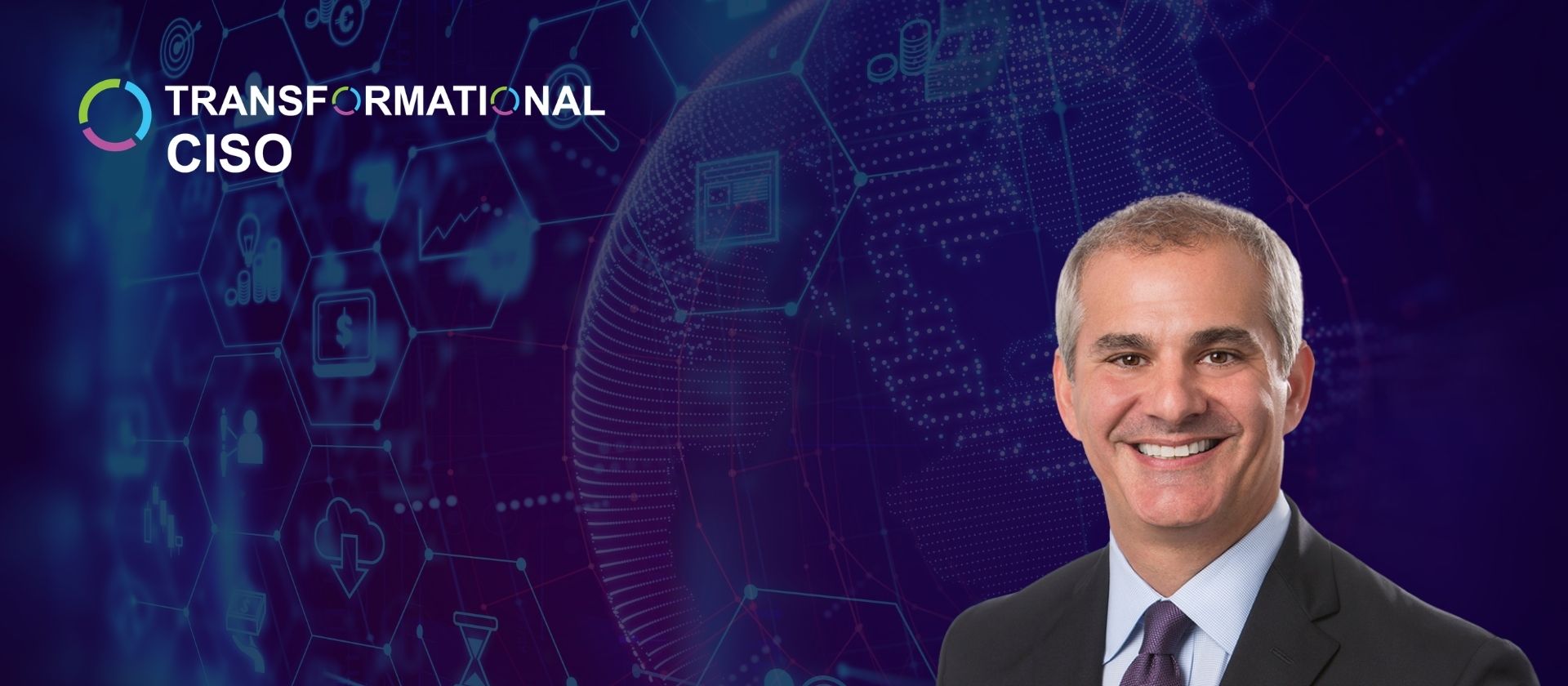
All the way from Switzerland, Flavio Aggio, CISO of the World Health Organization will keynote our Transformational CISO Virtual Assembly on April 27, 2021. In the midst of such a turbulent and critical year for cybersecurity, Aggio is a wealth of knowledge on digital innovation, enterprise architecture, and the execution of strategies that improve information security. At WHO, he is responsible for both Information Security & Cybersecurity, which focus on governance, risk management, policies, rules and procedures, security standards, security incident response, security operations, and staff awareness activities.

In this Keynote Address, Aggio will address digital transformation and innovation, and how WHO’s cybersecurity team has pivoted in the midst of COVID-19. If you’re interested in joining this keynote session, go here to RSVP!

About Flavio

As Chief Information Security Officer (CISO), Flavio Aggio is responsible for Information Security and Cybersecurity at the World Health Organization (WHO). Additionally, he represents WHO in key forums focused on Information Security and Cybersecurity. With more than 30 years of experience in specialized chemical manufacturing, semiconductor, consumer product, government, and international organization industries, Flavio brings tremendous technical leadership and operational expertise to WHO.

Prior to joining WHO, Flavio was the Chief Technology Officer at the City and County of San Francisco, where he developed technology solutions to modernize and protect the city. Before that, he held technical leadership positions in Enterprise Architecture, Project Management, Telecommunications, and IT operations with Unisys, ASML, Dow Chemical, and Rohm & Haas.

In 2014, Flavio enabled the interconnection of the San Francisco and San Jose WiFi networks. The two cities were using a new technology (Hotspot 2.0) allowing smartphones to automatically connect and roam between their two networks as well as provide a layer of security on what would not normally be available in wide-open public hotspots. Flavio holds a Bachelor of Science in Physics from Sao Paulo University in Brazil and an Executive MBA from Temple University in the USA.

Cybersecurity Innovation Starts Here

Digital Transformation involves ongoing exploration by today’s leaders, and our best advice is to not trek the journey alone. Our Transformational CISO Virtual Assembly coming this April is set to be a groundbreaking opportunity for leaders to virtually connect on the current trends & challenges the industry is facing amid COVID-19. Our assemblies are virtual for the time being, but you can still expect the same high-level discussion & networking as a Millennium onsite experience. Go here to RSVP!

Finding Retail Marketing Efficiency in 2021

Last year, we saw the COVID-19 pandemic alter buyer behavior as consumers migrated to digital purchase channels. In 2020, McKinsey uncovered that 40 percent of consumers reported switching brands or retailers. Gartner noted that “Marketing organizations are ill-prepared for COVID-19’s impact on the global economy and consumer sentiment, and this crisis will only exacerbate the budget strain we saw developing in 2019.” Indeed, in this new world where retail marketers are being asked to do more with less, it’s imperative to search for ways to attract more shoppers, increase purchase conversion, and generate more repeat purchases. 

Now a year into the pandemic, what have we learned? 

Our partners at DELVE took a look at the year behind us and found the key to retail marketing efficiency in 2021. Their recent article outlines how to improve ROAS, CPA and ROI in Retail Marketing for greater efficiency.

Go here to read the full article.

About DELVE 

DELVE helps brands improve marketing ROI and accelerate revenue growth by identifying and converting their most profitable audience segments. As a data science expert, we integrate disparate data sources and technology stacks to deliver analytics and predictive insights that business leaders trust to improve decision making. As a digital marketing partner, we act as an

extension of brand marketing teams to plan, deliver and optimize analytics-first media campaigns to accelerate lead generation and recurring revenue growth. As a technology consultant, we provide digital skills training and technology integration services to sharpen digital competency. With locations in North America and Europe, DELVE is trusted by brands around the world for efficient revenue growth. DELVE is a certified Google Marketing Platform Partner, a Google Cloud Certified Services Partner, and one of Inc. 5000’s fastest-growing companies.

#MillenniumLive with Darktrace on Recent Cyber Attacks & Enterprise Defense

It’s definitely a historic time for cyber, with challenges of remote work, greater risk, and finding the right solutions for your enterprise security posture. #MillenniumLive is thankful to have Justin Fier, Director of Threat Intel & Analytics at Darktrace, to help our members understand these challenges. In this episode, we discuss the recent attacks targeted on the healthcare and education sectors, why supply chain attacks aren’t anything new, and how cybersecurity leaders can prepare for the demanding year ahead. 

Watch the video interview below, or listen to the podcast episode on Spotify or Apple Podcasts.

About Darktrace’s Cyber AI:

The application of artificial intelligence to the cyber defense challenge has marked a fundamental shift in our ability to protect critical data systems and digital infrastructures. For strained security teams, it offers the possibility to keep pace with an ever-evolving threat landscape.

While rule and signature-based solutions offer some protection against pre-identified threats, the reality is that attacks consistently evade these tools. Powered by unsupervised machine learning, Cyber AI responds to these threats before they become a crisis.

Cyber AI is a self-learning technology — it learns ‘on the job’, from the data and activity that it observes in situ. This means making billions of probability-based calculations in light of evolving evidence.

Darktrace has crystallized this approach to cybersecurity in the form of the Darktrace Immune System, which is relied on by thousands of organizations to protect against threats in the cloud, email, network, and industrial environments.

“Darktrace has identified a new form of cybersecurity that moves the whole industry forward beyond current defense models. By applying advanced machine learning methods to a novel software application, it has established a world-beating company that has no significant competitor.” 

Click here for more information!

Assembly Recap: Transformational CISO & CISO Healthcare

Cybersecurity leaders have been brought to the forefront of their organizations in the wake of ongoing disruption, which is why we were excited to host our Transformational CISO & CISO Healthcare Virtual Assembly this week. It was an engaging two days filled with interactive workshops and keynotes, C-Suite networking, and peer-to-peer problem solving on the most pertinent topics within cybersecurity today.

In case you missed it…

What We Learned From Our Keynote Speakers

sujeet bambawale

Sujeet Bambawale, CISO at 7-Eleven, started off this two day event with an engaging Keynote on what’s ahead in cybersecurity. Threat intelligence is on the rise, paving the way for attack simulations in order to meet increasing expectations. This will allow security teams to test efficacy in real-time against the latest threats. Sujeet also touched on a subject that proved to be a theme throughout the remainder of the Assembly: rapidly changing talent pipelines and the importance of diversity of experience and background within cybersecurity teams.

keynote panelOur day two Opening Keynote Panel was led by Diana Burley, Vice Provost for Research at American University, and featured panelists Ann Hines, Business Information Security Officer, Principal, USAA; Shefali Mookencherry, CISO, Edward-Elmhurst Healthcare; Brian Mork, CISO, Westinghouse Electric Company; and Devin Shirley, CISO, Arkansas Blue Cross Blue Shield. The panel focused on rethinking data governance frameworks in the midst of constant disruption. Shared insights included the need for more stringent asset management, building trust with vendors and maintaining control over subcontractors, and adequately training staff on security in a remote setting. Our panelists also noted that remote work is not new, but the scale at which it is currently implemented is, which means that security must be part of the overall workplace culture.

Chris Leach from Cisco led an interactive discussion on what it means to be a CISO for change. The CISO is responsible for managing security, but security is a team effort. That’s why CISOs need to act as thought leaders and involve other leaders within the organization in order to lead valuable change. CISOs are often viewed as the “no” people, but with the right collaboration, they can be the force behind change.

Engaging C-Suite Discussions

Tim Rohrbaugh, Chief Information Security Officer at JetBlue Airways Corporation discussed the Kaizen approach to security program improvement. This approach focuses on incremental, measurable change to threat actors’ cost, value proposition, or address motivations. The incremental change prevents the fear associated with long term change, and Threat-Informed Defense speeds up response times to quickly changing threats.  The concept’s ultimate goal is to improve visibility in order to eventually automate response.

jetblue

Next up, Jim Rutt, Chief Information Officer and Chief Information Security Officer, Dana Foundation led a discussion on a risk management approach to allocating budget. He notes that while risk cannot be completely eliminated, it can be reduced as much as possible to an acceptable level with proper qualitative and quantitative analysis. Risk mitigation can feel like a daunting task, but basic risk formulas can help give you a better understanding of your situation.

Robert Pace from Invitation Homes addressed the big threat: endpoint security. He stresses the importance of going back to the basics and determining the right “tools of choice” within your organization. Discussions on configuration, strategy, budget, and reporting are essential before new technology is introduced, but also for existing systems that need enhancement. 

Ed Harris from Mauser Packaging led an interactive session on becoming a 2.0 CISO. His advice is to use four simple tools. First, hiring smart people allows your team creates a strong team capable of bringing new ideas and value. Second, creating visibility is key because identifying anomalies requires understanding your baseline. Next, personal R&D teams can utilize think tanks and resources to problem-solve and stay on top of new developments in cybersecurity. Finally, it is important for CISOs to not just understand security and information system language, but also business language in order to make decisions on behalf of the business and move up in their organization. 

For the final session of the Assembly, Benjamin Corll CISO at Coats addresses automation’s role in cybersecurity. Automation can be useful in reducing alert fatigue, filling the gaps where there is a lack of resources, and creating the consistency that the human element lacks. While there is still room for growth and improvement in automation, the only way to progress is to start implementing it. 

Insights From Our Solution Providers

Sophos

Our partners at Sophos led the discussion on targeted ransomware. The best way to combat these targeted attacks is to understand how they are conducted by hackers. The key is to keep your guard up and be on the lookout for attacks that take place when the organization is most vulnerable.

Abnormal Security

Roman Tobe from Abnormal Security gave us the intel of Vendor Account Compromise, including how hackers gain access to accounts and how to stop them. It is important for organizations to understand common communication practices in order to more easily detect anomalies and stop them before they wreak havoc on vendor accounts. 

Palo Alto Network

Bruce Hembree from Palo Alto Networks noted that while people take time off, cyber threats are constant. That’s why Palo Alto Networks assesses organizations dynamically and in real time, and automatically respond to active threats. An automation funnel is used in order to handle a large volume of alerts and avoid major incidents.

Fortinet

Troy Ament and Jay Mervis from Fortinet led a workshop on evolving threats within healthcare. Between increased virtual visits and the rise of AI and Machine Learning, there is no doubt that digital innovation is causing an increase in cyber threats. That is why it is important for leaders to integrate network solutions with security policies. 

BeyondTrust

Chris Hills from BeyondTrust explains how you can switch from a reactive to a preventative approach to endpoint security. As threats continue to evolve, endpoints are becoming more complex, which leaves companies needing to do more with less. Furthermore, the “new normal” has created a perfect storm for privilege abuse. Because of this, organizations need complete endpoint security that acts as an ecosystem, not a single solution. One key part of creating a secure ecosystem is removing admin rights from the end user and giving them just enough privileges to do their job.

Qualys

Jeremy Briglia from Qualys notes that it is important to create an automated system without increasing associated risks. Continuous risk assessment can help ensure risks do not slip through the cracks. Asset inventory, vulnerability and configuration assessment, patch management, and threat risk and prioritization are essential to mitigating these risks. 

And the Winner of The Millennium Mission Prize is…

Mario Memmo

The Millennium Alliance will donate $1,000 on behalf of Mario Memmo to the charity of his choice. Mario won this award as a part of The Millennium Alliance’s new initiative, Millennium Mission, in which we donate to charities such as AdoptAClassroom.org, Feeding America, The Miracle Walk, the U.S. Coronavirus Emergency Response, and others on behalf of the most engaged attendee for each event. We are excited to make a donation in Mario Memmo’s name!

Don’t miss out on the next Transformational CISO Assembly! Join us on April 27th for our Transformational CISO Assembly & CISO Financial Services Virtual Assembly. Go here to RSVP.