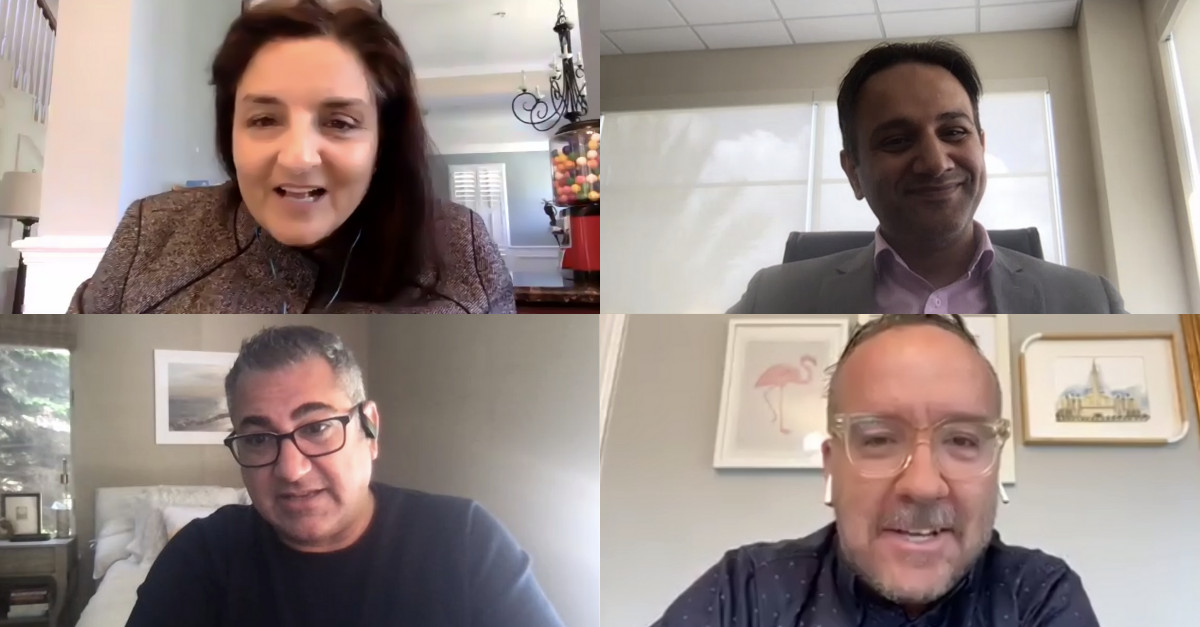
Keynote Speaker Dr. Stephen Klasko to Discuss “The Pandemic of 2030” at Our Upcoming Assembly!

There is so much to discuss at our upcoming Patient Experience & Digital Healthcare Virtual Assembly, and we’re thrilled to have the conversation kick off with our honored Keynote Speaker, Dr. Stephen Klasko, President & CEO of Thomas Jefferson University and Jefferson Health. In the midst of a historic and turbulent year for healthcare, Klasko has notably led one of the nation’s fastest growing academic health institutions, published two books on healthcare & the patient experience, and was recognized as “the first Distinguished Fellow” for the World Economic Forum”.

Klasko is a known innovator and trailblazer in digital healthcare and patient experience – remarkably his best-selling 2018 book, “Bless This Mess: A Picture Story of Healthcare in America”, anticipated many of the problems the US healthcare system is now facing in the midst of COVID-19. Always looking ahead, his keynote address will look into “The Pandemic of 2030”, and what healthcare leaders can do today to prepare their organizations for years to come.  If you’re interested in joining this keynote session, go here to RSVP!

About Dr. Stephen Klasko

Dr. Stephen Klasko is an advocate for a transformation of health care and higher education. He has been a pioneer in using technology to build health assurance, not just sick care. As President and CEO of Philadelphia-based Thomas Jefferson University and Jefferson Health since 2013, he has led one of the nation’s fastest growing academic health institutions based on his vision of re-imagining health care and higher education. Under his leadership, Jefferson Health expanded from three hospitals to 14. His 2017 merger of Thomas Jefferson University with Philadelphia University created a pre-eminent professional university that includes fashion, design, architecture and health. In 2020, he was named the first Distinguished Fellow of the World Economic Forum, and will co-chair the WEF Board of Stewards for The Future of the Digital Economy and New Value Creation.

In 2020, he has published two books: Un-Healthcare: From Sick Care to Health Assurance, with Hemant Taneja. And Patient No Longer: Why Healthcare Must Deliver the Care Experience that Consumers Want and Expect. His best-selling 2018 book is titled, Bless This Mess: A Picture Story of Healthcare in America. President Klasko has served as dean of two medical colleges, and leader of three academic health enterprises before becoming President and CEO at Jefferson. For three years he has been listed among the Top 100 most influential people by Modern Healthcare – in 2018 he tied for #2. His work on healthcare in a digital economy includes his 2009 collaboration with Apple Inc on digital media in healthcare, the 2012 building of one of the nation’s largest medical simulation centers (CAMLS), and the development at Jefferson of his vision of “healthcare with no address.” 

He is working with several digital health companies on the vision of “health assurance,” using new technology to keep people well, instead of waiting to provide sick care.

Healthcare Innovation Starts Here

Digital Transformation involves ongoing exploration by today’s leaders, and our best advice is to not trek the journey alone. Our Patient Experience Transformation Virtual Assembly coming this May is set to be a groundbreaking opportunity for leaders to virtually connect on the current trends & challenges the industry is facing amid COVID-19. Our Assemblies are virtual for the time being, but you can still expect the same high-level discussion & engagement as a Millennium onsite experience. Interested in joining the conversation? Go here to RSVP!

#MillenniumLive on What’s Next in Healthcare with AKASA Health

This week on #MillenniumLive we’re joined by Ben Beadle-Ryby, Co-Founder and Vice President at AKASA Health. We discuss the challenges in solving the Healthcare Revenue Cycle, the idea of “Unified Automation” and Ben offers useful advice for healthcare providers navigating the road ahead.

Watch the video interview below, or listen to the podcast episode on Spotify, Apple Podcasts or Soundcloud.

About AKASA Health

AKASA has pioneered Unified Automation™ to provide health systems with a single solution to efficiently, accurately, and autonomously navigate the complex state of medical reimbursement in the United States, enabling health systems to decrease their cost of care and be better stewards of the healthcare dollar.

We evaluated modern automation approaches from some of the most complex domains in the world, and we derived core principles – like the best ways to monitor existing workflows, learn from workflows at scale and quickly adapt to change. We then built proprietary technology from the ground up to apply these core principles to the unique challenges of healthcare revenue cycle management.

Our solution lives and operates within the existing electronic health record (EHR) and billing systems of our clients. We can deploy entirely remotely and there is no new training required for existing staff.

This consists of three elements:

  1. Proprietary technology that captures actions related to specific tasks.
  2. Machine learning (algorithms) that learn to perform those tasks.
  3. Human decision support.

Interested in trying it for yourself? Go here for a demo.

The Future of Positive Marketing with Dawn Lerman

Marketing has seen a significant shift over the course of the past year as a result of ongoing disruption. Consumers have become more skeptical, and expectations for brands continue to increase, leading to the rise of cause marketing and stronger brand-consumer relationships. More and more brands are on board with the idea that positive impact is not only possible, but necessary. For Dawn Lerman and her colleagues at Fordham University, however, positive marketing is not a new concept. In fact, Fordham’s Center for Positive Marketing has been creating a positive influence through marketing since 2011. 

Millennium Alliance Advisory Board Member Dawn Lerman, Professor of Marketing & Executive Director at Fordham University’s Center for Positive Marketing, explains it best: 

“My colleagues and I founded the Center for Positive Marketing at a time when marketing seemed to be getting an increasingly bad rap. We went into marketing—first in industry and then in academia—for the good that marketing can do in helping people address their needs and solve their problems.”

It all comes down to the actual purpose of marketing. To someone outside of the marketing space, the purpose of marketing seems simple: persuade consumers to buy a product. It’s an exchange. However, any good marketer knows that the process of marketing a product is actually much deeper than that. Marketers, and brands, seek to fill needs and solve problems. 

“As marketers we do an excellent job persuading consumers to buy our brands but we haven’t done a particularly good job marketing ourselves and the value of our work. Our measures for evaluating brands—things like brand financial value, word-of-mouth and repurchase rates—are entirely firm-focused. Even satisfaction fails to capture the value of marketing. A customer does not merely set out to be satisfied with a product, but ultimately aims to solve a problem or otherwise improve his or her own life. To address this, we developed a new measure that captures how brands fulfills these aims and we use it in an annual survey of Americans to find out how and which brands are contributing to their lives.”

The challenge for marketers is both communicating this intent and creating a larger impact outside of simply filling a need.

“At the end of the day, marketers have not been particularly good about marketing marketing. We wanted to help change that.”

One of Dawn Lerman’s areas of expertise within marketing is language. We use language every day to communicate ideas, feelings, facts, and everything in between. Marketing language is particularly important when trying to steer the conversation around a brand, which is the subject of her co-authored book The Language of Branding: Theories, Strategies, and Tactics. When we think of marketing, we think of a product or service: how do we influence emotions surrounding a soda brand, a hotel chain or a clothing line, for example. However, marketing principles can also be applied to concepts or ideas, and even something as broad as the pandemic. When asked about the impact of marketing language in recent months, Dawn notes:

“In many ways, marketing has refound its purpose during the pandemic. When I say that, I am thinking about commercial marketing and commercial brands. We could have used more of a marketing mindset to share information about covid with the public, help contain the virus and encourage vaccination.  Even some of the language around the pandemic has harmed rather than helped. I would argue, for example, that the term “socially distant” contributes to our feeling socially isolated.”

As for predictions, Dawn thinks we will see more momentum in the direction we’ve been heading, especially in terms of purpose-driven marketing.

“I think we are going to see brands become increasingly purpose-driven. Authenticity has been a buzzword for a few years now but it will be more important than ever as will empathy. Marketers will be challenged to deliver on purpose, authenticity and empathy in an increasingly polarized society.”

Leading a purpose-driven marketing strategy is no small task, which is why the Center for Positive Marketing has the resources business leaders need to make this shift. And while industry experts are leading the charge, there is plenty of room for student involvement, which brings fresh ideas and talent to marketing executives while providing students with an invaluable resource for professional growth and exposure to real business issues. 

“Through our fellowship program, students work under the advisement of faculty on marketing projects brought to us by executives who could use some extra hands. In addition to a completed project, executives get access to a pipeline of new marketing talent and an opportunity to see our best and brightest at work. We also collaborate with executives in both applied and scholarly research. For example, we use our Consumer Value Index to help companies uncover their brand’s true value and opportunities for repositioning. Also, we host many executives who speak at our events and in our classrooms. They love to give back and our students love learning from them.”

Dawn Lerman has expressed a passion for bridging the gap between academia and industry, and the center is a great resource to foster more collaboration. Involving students in this collaboration not only creates better outcomes for today’s leaders, but helps shape the leaders of tomorrow. 

“Leading a team through a crisis requires authenticity, vulnerability, empathy, and trust. Through the pursuit of a common purpose, leaders inspire others to be leaders as well. But we have known this for some time. What was unique about this crisis was that all areas of routine got dismantled, and they were dismantled for everyone. Teams needed an entirely new routine as did each individual on a team. Leaders have needed to understand team members as individuals and develop trust in more personalized ways.”

At The Millennium Alliance, we recognize both the importance of leadership and the fact that leadership is a process that requires continuous nurturing. Communities such as the Center for Positive Marketing are the key to furthering the executive education of today’s leaders, while equipping a new generation of leaders with strong values, powerful connections, and an abundance of resources to create real change.

Click here to read more about Fordham University’s Center for Positive Marketing.

Crypto Talk with Howard Kriege‪r‬ on #MillenniumLive

This week #MillenniumLive has a special bonus episode hosted by our Co-Founder Alex Sobol with Howard Krieger, Chief Executive Officer of unFederalReserve. The two take a deep dive into cryptocurrency, decentralized finance, and policy/regulation over digital assets. Think you need a better understanding of cryptocurrency? This is the podcast you need to listen to – Krieger is sought out to “demystify” the industry by breaking it down, and relating it to the processes we’re already doing today. He also discusses his life in finance, career journey, and what brought him to unFederalReserve.

Listen to the podcast episode on SpotifyApple Podcasts,
Howard Krieger currently serves as co-founder and CEO, UnFederalReserve. Krieger also serves as Managing Director, CBIZ Valuation Group (“CBIZ”), where he specializes in the valuation of complex financial instruments including crypto-currency loans, interest rate swaps, agency, and non-agency mortgage-backed securities (MBS), and collateralized debt obligations (CDOs).

Prior to founding UnFederalReserve, Krieger served as Valuation Director at WithumSmith+Brown and KPMG and was also a Senior Manager at one of the Big 4 Accounting Firms. Krieger is well-versed in intangible business valuation, intellectual property valuation, financial modeling, valuation of equity-participating instruments, and exotic financial assets and liabilities. Krieger holds a bachelor’s degree in business administration from James Madison University and an MBA with a concentration in qualitative finance from Rutgers University.

Disclaimer: This presentation does not constitute an offer to sell, a solicitation of an offer to buy, or a recommendation of any security or token or any other product or service by Residual Token, Inc. or any other third party regardless of whether such security, product or service is referenced in this presentation. Furthermore, nothing in the presentation is intended to provide tax, legal, or investment advice and nothing in this presentation should be construed as a recommendation to buy, sell, or hold any investment or security or token or to engage in any investment strategy or transaction. Residual Token, Inc. does not represent that the securities, products, or services discussed in this presentation are suitable for any particular investor. You are solely responsible for determining whether any investment, investment strategy, security, token, digital asset, cryptocurrency or related transaction is appropriate for you based on your personal investment objectives, financial circumstances and risk tolerance. You should consult your business advisor, attorney, or tax and accounting advisor regarding your specific business, legal or tax situation.

Loyalty in 2021: Jumpstart Data Collection & Boost Brand Affinity

Of course consumers are looking for great products, but they are also expecting great experiences.

Does your Loyalty Program meet expectations? 2021 could be the best time for your brand to revamp the data collection process and build a new loyalty experience for your customers. In this report, our partners at Talkable discuss:

  • First-party and zero-party data
  • Technology and data connectedness
  • How loyalty programs can jump start data collection and build brand affinity
  • Elements to consider when building a loyalty program
  • Workbook instruction on strategy, promotion, personalization
  • What to expect in terms of ROI

Download the report here

Brad Wilson Joins Us On #MillenniumLive

On today’s episode of #MillenniumLive CEO Series: Millennium Co-Founder Alex Sobol had the opportunity to chat with Brad Wilson, CEO Emeritus of Blue Cross Blue Shield of North Carolina, to talk life and leadership, his time at BCBSNC which began in 1995, and the rollout of the Affordable Care Act, prioritizing affordable and accessible health care in his home state. Previously, Wilson practiced law and served as general counsel to Governor Jim Hunt.

Listen to the podcast episode on SpotifyApple Podcasts, or SoundCloud.

Why Culture-Building Takes A Village, From Denise Lee Yohn

As originally published by Denise Lee Yohn on Linkedin

The traditional top-down approach to building organizational culture no longer works, if it ever did. Culture must be a top leadership priority but it can’t be only a leadership responsibility. A new culture-building approach — one in which everyone in the organization is responsible for some aspect(s) — is needed and, in fact, is already fueling the success of some organizations.

I recently wrote about this new shared-responsibility culture-building model for the Harvard Business Review and explained how different people and functions within an organization play different roles in developing and maintaining its desired culture (that is, the culture needed to support and advance the company’s goals and strategies.) For example:

  • Board of Directors — Guide the definition and development of the desired culture, ensuring that it aligns with business goals and meets the needs of all stakeholders.
  • Owner/CEO & Executive Team – Define the desired culture and cultivate it through leadership actions.
  • Human Resources – Design employee experiences that interpret and reinforce the desired culture. Also implement strategies and programs that enable the rest of the organization to fulfill their culture responsibilities.
  • Compliance, Risk, and Ethics — Provide input to the definition of the desired culture from the perspective of ethics and risk. Also ensure execution on desired culture aligns with the company’s risk management strategies.
  • Middle Managers – Deliver employee experiences that interpret and reinforce the desired culture. Implement culture-building strategies.
  • Employees — Provide input to the definition of the desired culture and culture-building programs and tactics. Align their attitudes and behaviors with the desired culture.

Due to editorial requirements, my HBR article was only able to dive into the culture-building responsibilities of the board of directors and middle managers. (See the original article and this infographic for more on these.)

This piece now addresses the roles that Human Resources and Compliance/Risk/Ethics* play in shaping and cultivating organizational culture. Although these two groups might not be the first to come to mind when considering how to cultivate an on-brand culture, they can – and should – influence it significantly.

(*Although these three areas are different and may be organized into separate functions and/or handled separately within some organizations, I am grouping them together since they are highly related and should play similar roles in culture building.)

Shape Culture Through Employee Experience and New HR Priorities

The culture-building responsibility of HR is often taken for granted in smaller organizations — and in larger ones is relegated to a sub-group within the HR department. But through its impact on the employee experience (EX) and involvement in new workforce priorities such as diversity, equity, and inclusion (DEI), HR as a whole has extensive influence on an organization’s culture — so all its managers must be actively, intentionally, and fully engaged in culture-building efforts.

EX is the sum of everything an employee experiences throughout his or her connection to the organization – and organizational leaders should design its EX to support and advance its desired culture. Just as customer experience is the manifestation of a company’s brand, EX should embody and express the company’s culture. That means all HR strategies, programs, and functions — such as recruiting, onboarding, learning and development, compensation and benefits, performance planning, rewards and recognition – must interpret and reinforce the organization’s purpose and values and encourage the attitudes and behaviors desired from employees.

Moreover, HR managers are often at the forefront of organizations’ increasing priority on DEI practices, the requirements for shifting to remote or hybrid work, and new emphasis on workforce analytics and assessment. Organizations must consider the impacts of these new priorities on their cultures, mitigating the risks and distractions they pose and leveraging their power to accelerate and enhance culture change. HR, with its people purview, is in the perfect position to ensure this.

People in HR must not only adopt an active role in culture-building, but also work as enablers to help the rest of the organization fulfill their culture responsibilities. This includes efforts such as:

  • Developing and deploying tools such as culture guidebooks to help employees understand cultural norms and expectations, and culture assessment tools that enable managers to classify employee attitudes and behaviors as supporting or detracting from the desired culture.
  • Offering training and organizational development programs that develop leadership capacity for culture-building and employee engagement with the culture.
  • Spearheading culture audits and assessments to measure and track progress toward the desired culture.

For example, the consultants at Walking the Talk report on the effectiveness of an HR-led culture assessment in facilitating culture change at growing entertainment conglomerate. Using a combination of qualitative and quantitative research methods, the company was able to pinpoint how the actual culture differed from the desired culture on six key dimensions. These findings led to the development of a global plan to realign systems and symbols and define the changes needed to shift employee behaviors.

Integrate Compliance, Risk, and Ethics Into Culture Core

Some organizations may recognize the importance of “risk culture” or a culture of risk management; but compliance, risk, and ethics priorities are usually not integrated into core culture-building efforts. And managers in these areas tend to be perceived naysayers who are likely to block new initiatives. But these functions should be engaged as strategic partners who help weigh the risks of doing something along with those of not doing it and can move the organization forward by shaping its culture.

Take a company’s Code of Conduct, for example. Consider how some organizations use their Code of Conduct to address ethical behavior and standards for professional behavior (e.g., conflicts of interest or reporting harassment), while separately expressing core values that describe the unique ways it wants employees to think and act (e.g., radical candor or learning mindset). Employees can become confused if these two guidelines conflict or don’t seem to relate to each other. Instead, the compliance, risk, and ethics groups should work with the organization’s leaders to develop a Code of Conduct that interprets and reinforces the company’s desired culture and risk management approach.

Other ways the compliance, risk, and ethics functions should be actively engaged in culture-building include:

  • Providing recommendations, guidance, and assessments of risk relative to the desired culture – e.g., input on new behavior standards and expectations for employees in areas such as incentives and performance management.
  • Identifying trends from external sources and assessing issues based on internal reporting channels about the adoption of new technologies or processes that may advance or detract from the desired culture.
  • Ensuring that tools such as ethics decision treesprocesses such as a whistleblower program, and systems such as compliance monitoring align with the desired culture.

Volkswagen has experienced the benefits of this more integrated approach. The compliance and ethics functions at the company have played a crucial role in the Together4Integrity program that the company initiated in the wake of the emission scandal several years ago. While this is not surprising, it is remarkable that the revamped whistleblower program they implemented has quickly produced a more open, transparent company culture, as evidenced by the dramatic increase in the number of whistleblowers who attached their names and contact information to tips in 2019 (80%, up from 15% just two years earlier), as reported by The Wall Street Journal.

Build Culture By Engaging Everyone

Human Resources and Compliance/Risk/Ethics are only two of the many groups that must be engaged in culture-building. An organization’s leaders may spearhead the definition of the desired culture, but different functions and groups within the company are best equipped to support and advance different aspects of it.

Without everyone engaged and empowered to build culture, a desired culture is likely to remain only a desire.

***

This is the latest in my Brand+Culture Series. To be notified whenever new articles are posted here, subscribe by clicking on the button in the upper righthand corner of the page. To learn more about the series, see:

The Millennium Alliance Will Now Accept Bitcoin Payment From Its Customers

NEW YORK – April 9, 2021 – The Millennium Alliance has just announced that it has started allowing customers and vendors to use their cryptocurrency holdings as a form of payment for future transactions. With Bitcoin nearly doubling in value since the start of this year, it was important to Millennium to embrace the digital currency to accommodate its customers as much as possible. Bitcoin has established itself as one of the most accessible and versatile forms of virtual currency while also becoming the most popular and widely used.

“Bitcoin is no longer a guessing game as to whether or not it is a viable and an in-demand financial product that individual consumers and businesses of all sizes want to acquire. As more businesses and long-standing Millennium Alliance clients add substantial amounts of Bitcoin to their balance sheets, in addition to other standard forms of payment, we wanted to add this as a payment option as adoption and acceptance of Bitcoin becomes more mainstream.” Alex Sobol, Co-Founder, The Millennium Alliance

Millennium is the latest company to place itself at the forefront of the growing Bitcoin craze, with others including Visa, PayPal, Tesla, Starbucks, and The Home Depot. It’s become clear that cryptocurrencies are here to stay and thus enabling crypto payments now, will allow Millennium to stay ahead of the curve. 

ABOUT THE MILLENNIUM ALLIANCE

Headquartered in Midtown Manhattan, The Millennium Alliance is a leading technology, business, and educational advisory firm. Focusing primarily in areas such as business transformation, executive education, growth, policy, and need analysis, Millennium is quickly becoming one of the most dynamic locations for collaboration across the world.

We provide a framework for Fortune 1000 C-Level executives, leading public sector/government officials, and thought leaders across a variety of disciplines, to meet their peers, understand industry developments, and receive an introduction to new technology and service advancements to help grow their career and overall company value. With a constant thirst for a conversation that has real value, it is our duty to provide a platform for all leaders to further develop in an ecosystem of innovation and knowledge so all parties can continue to shape the real purpose of business: to make things efficient and worthwhile.

The Millennium Alliance Launches Its New Charitable Initiative, The Millennium Mission

NEW YORK – April 8 2021 – The Millennium Alliance is proud to launch The Millennium Mission, a new charitable endeavor that incorporates philanthropy into the Assemblies that Millennium’s members know and love. At each Assembly, the most engaged attendee will be awarded with a $1,000 donation in their name to the charity of their choice on behalf of The Millennium Alliance. This allows attendees to make an impact simply by participating in a Virtual Assembly, networking with their peers, and furthering their executive education journey. Some of the organizations Millennium is donating to this year include AdoptAClassroom.org, Feeding America, The Miracle Walk, The U.S. Coronavirus Emergency Response, The Alzheimer’s Association, and Habitat for Humanity. During this time of uncertainty, The Millennium Alliance is honored to do its part in making a difference within our communities.

“Giving back to our community has always been a core value of The Millennium Alliance. As a company, we feel especially grateful to be in the midst of one of our strongest years to date, despite all of the disruption over the past 12 months that has hit our industry particularly hard. It was important to our entire team to pay it forward and show our gratitude for being in such a fortunate position. This is what led us to create this charitable program that will allow us to donate to an incredible cause after each one of our Assemblies, which I am excited to see grow along with Millennium in the coming years.” Alex Sobol, Co-Founder, The Millennium Alliance

The Millennium Mission award winner for our Digital Enterprise and Data Transformation Virtual Assembly went to Jean-Pascal Chauvet of Deutsche Bank, who chose to make his donation to Habitat for Humanity. For our Transformational CISO and CISO Healthcare Virtual Assembly, Mario Memmo of Otis Elevator Company chose The Alzheimer’s Association for his donation. Sabrina Cherubini from Ann Inc was the winner for our Transformation CMO & Retail Virtual Assembly, and she chose Feeding America. Congratulations to our winners, and Millennium looks forward to making many more donations moving forward. 

Click here to learn more about The Millennium Mission and to keep up-to-date with our latest winners and charities of choice.

ABOUT THE MILLENNIUM ALLIANCE
Headquartered in Midtown Manhattan, The Millennium Alliance is a leading technology, business, and educational advisory firm. Focusing primarily in areas such as business transformation, executive education, growth, policy, and need analysis, Millennium is quickly becoming one of the most dynamic locations for collaboration across the world.

We provide a framework for Fortune 1000 C-Level executives, leading public sector/government officials, and thought leaders across a variety of disciplines, to meet their peers, understand industry developments, and receive an introduction to new technology and service advancements to help grow their career and overall company value. With a constant thirst for a conversation that has real value, it is our duty to provide a platform for all leaders to further develop in an ecosystem of innovation and knowledge so all parties can continue to shape the real purpose of business: to make things efficient and worthwhile.

#MillenniumLive with Wolters Kluwer on AI-Powered Healthcare & Recent Tech Trends

#MillenniumLive is joined by Dr. Itay Klaz, Medical Director for Clinical Surveillance & Compliance at Wolters Kluwer, Health. In this week’s episode, we take a deep dive into the development, implementation, and support of Wolter Kluwer’s AI-powered clinical surveillance solution and receive the physician’s perspective on some key trends surrounding enterprise-level EHR, treating Sepsis, and value-based care.

Listen to the podcast episode on Spotify, <a

Can a data lake deliver new levels of interoperability? Can AI help patients better manage their own care or students prepare for med school? With Wolters Kluwer, you can.

Wolters Kluwer is home to trusted clinical technology and evidence-based solutions that drive effective decision-making and outcomes across healthcare. Specialized in clinical effectiveness, learning, research and safety.

Go here for more information