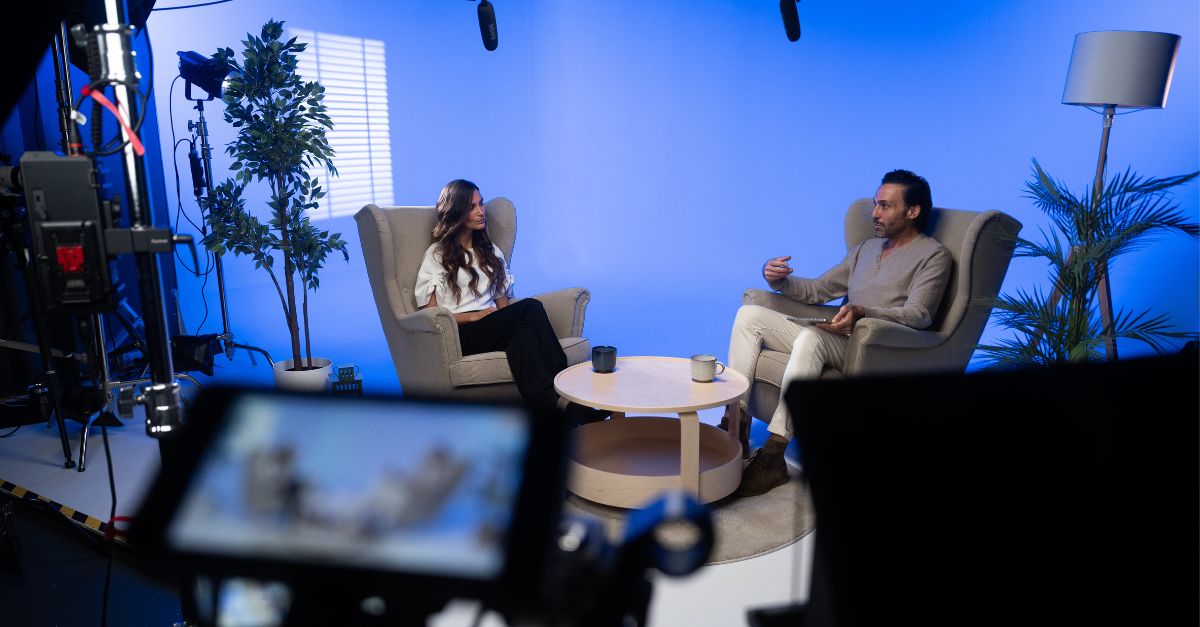
Contributed by Shootsta
Enterprise marketing has spent the past two decades optimizing for attention. The next decade will belong to organizations that optimize for trust.
Artificial intelligence has fundamentally changed the economics of content creation. Marketing teams can now generate articles, social posts, videos, personalized outreach, and campaign assets at a speed and scale that would have been unimaginable only a few years ago. What once required weeks of planning and significant creative investment can now be accomplished in hours.
Yet one constraint has remained unchanged.
While organizations have dramatically increased their capacity to produce content, their audiences have not developed a greater capacity to consume it. Customers, employees, partners, and investors still have the same finite amount of attention. Every organization is publishing more, but no one is consuming proportionately more. The result is an environment where content is abundant, attention is scarce, and standing out has never been more difficult.
This is the Trust Economy.
As artificial intelligence democratizes content creation, competitive advantage shifts away from the ability to produce more and toward the ability to inspire confidence. Products can be copied. Technology can be matched. Campaigns can be replicated. Trust cannot.
The evidence is already emerging. According to Edelman’s 2025 Brand Trust Report, 80% of people trust the brands they use, a higher level of trust than they place in business, government, media, NGOs, or even their employer. At the same time, research from LinkedIn, Bain & Company, and NewtonX found that 81% of B2B purchases were won by vendors already known across the buying group before the buying process began. The implication is clear. Competitive advantage is shifting from producing more content to building greater confidence in the people and brands behind it.
The implication is profound. Enterprise marketing is no longer competing simply for attention. It is competing for belief. And organizations that consistently earn belief will ultimately earn something far more valuable: trust.
Beyond Campaigns
Most enterprise marketing organizations excel at creating moments.
Product launches, customer conferences, demand generation campaigns, analyst briefings, and major brand initiatives are highly visible, carefully orchestrated, and often become the primary measure of marketing success. They play a critical role in shaping market awareness and driving commercial momentum.
But campaigns alone rarely determine whether an organization is trusted.
Trust is formed in the thousands of interactions that happen before, after, and between those defining moments. It grows when executives communicate with transparency during periods of uncertainty. It strengthens when subject matter experts consistently educate rather than promote. It deepens when employees hear directly from leadership, and when sales and customer success teams demonstrate expertise instead of relying on generic personalization.
In other words, organizations are not judged only by what they say during campaigns. They are judged by how they communicate every day.
The enterprise teams building the strongest brands recognize that communication is no longer just a marketing function. It is an organizational capability that shapes reputation, customer relationships, employee engagement, and long-term commercial performance.
That requires a different approach.
Rather than viewing communication as a series of isolated campaigns, leading organizations are building a balanced communication model that combines three complementary motions.
Peak creates moments that earn attention. Product launches, strategic campaigns, investor announcements, and major events generate visibility and signal intent.
Pulse creates a consistent rhythm of communication between those moments. Executive updates, customer education, thought leadership, employee communications, and ongoing storytelling ensure an organization remains relevant long after a campaign has ended.
Presence is created when leaders and subject matter experts become visible through authentic, consistent communication. By sharing expertise, explaining decisions, and engaging directly with customers, partners, and employees, they strengthen the credibility of the organization itself.
Together, these three motions transform communication from a series of marketing activities into a continuous engine for building trust.
Peak earns attention. Pulse develops belief. Presence sustains trust.
In the Trust Economy, organizations that invest only in Peak will always be competing for the next moment of attention. Organizations that master all three create something far more enduring: trust that compounds over time.
Why Video Has Become a Strategic Capability
The Peak, Pulse, and Presence framework explains what organizations need to build. The next question is how.
This is where video has become strategically important.
Video is often evaluated through engagement metrics such as views, watch time, and click-through rates. While these remain useful measures, they underestimate its greatest contribution to enterprise communication.
The greatest value of video is not higher engagement. It is higher belief.
In an environment where artificial intelligence can generate persuasive written content in seconds, organizations need communication channels that reinforce authenticity rather than simply increase output. Video allows customers to hear directly from a CEO explaining a strategic decision. It enables subject matter experts to simplify complex ideas with confidence. It helps employees connect with leaders as people, not just titles. In doing so, it communicates qualities that are difficult to replicate through text alone: expertise, transparency, empathy, and conviction.
It is no surprise that more than 90% of marketers report that video delivers a positive return on investment, according to Wyzowl’s State of Video Marketing. Yet perhaps its greatest return never appears on a dashboard. It is the confidence video creates among customers, employees, investors, and partners.
One organization that demonstrates this well is DUAL. Rather than reserving video for major campaigns, DUAL embedded it across executive communication, customer education, thought leadership, employee engagement, and customer stories. Strategic campaigns continued to create impactful Peak moments, while ongoing communication established a consistent Pulse and leaders strengthened their Presence through authentic, visible communication.
The outcome was not simply more video.
It was stronger credibility, deeper relationships, and a communication model that continuously reinforced trust across every stakeholder interaction.
That is the shift many enterprise organizations are now making. They are no longer asking, “How do we produce more videos?”
They are asking a far more strategic question.
How do we build an enterprise capability that enables trusted communication at scale?
Building Enterprise Video Capability
For most enterprise organizations, the challenge is no longer recognizing the value of video. It is operationalizing it.
Demand is growing across every function of the business. Marketing needs always-on content. Sales teams are incorporating personalized video into account-based selling. Customer success is using video to strengthen onboarding and adoption. Internal communications, learning and development, human resources, and executive leadership all increasingly rely on video to communicate more effectively.
Yet many organizations continue to support that demand with an operating model designed for occasional production rather than continuous communication.
The result is predictable. Creative teams become bottlenecks. High-value opportunities are delayed or abandoned. Leaders and subject matter experts want to communicate more frequently but lack the tools, confidence, or governance to do so at scale.
Leading enterprises are responding by changing the question.
Rather than asking, “How do we produce more videos?”, they are asking, “How do we build Enterprise Video Capability?”
The distinction is more than semantics.
Producing video is an activity. Enterprise Video Capability is an operating model.
It enables organizations to create trusted, high-quality communication consistently, while maintaining governance, brand integrity, and creative standards. More importantly, it enables Peak, Pulse, and Presence to operate together as a coordinated system. Campaigns continue to earn attention. Leaders become more visible. Subject matter experts educate continuously. Communication evolves from a collection of projects into a strategic capability that compounds trust over time.
Over the past decade, this has become one of the clearest lessons we’ve observed at Shootsta. The organizations achieving the greatest impact are rarely those producing the most videos. They are the ones that have embedded video into the way they communicate, making it an integral part of how they build relationships with customers, engage employees, and develop confidence in their brand.
Enterprise marketing has spent years investing in technologies that make communication faster.
The next competitive advantage belongs to organizations that make communication more trusted.
Where Do You Start?
Building Enterprise Video Capability is not about producing more content. It is about creating the governance, workflows, and operating model that enable trusted communication to scale across the business.
To help enterprise leaders on that journey, Shootsta has developed the Enterprise Video-First Communication Strategy Guide. Rather than focusing on production techniques, the guide explores how leading organizations operationalize Peak, Pulse, and Presence across marketing, sales, customer success, executive leadership, internal communications, and learning and development. It provides practical guidance for building communication capability that strengthens trust over time.
→ Download the Enterprise Video-First Communication Strategy Guide
Understanding best practice is only the first step. Understanding your organization’s current maturity is equally important.
That’s why we’ve also developed the Enterprise Video Maturity Assessment, a short executive diagnostic that evaluates how effectively your organization is building Enterprise Video Capability across governance, adoption, scalability, leadership communication, and strategic alignment.
Participants receive an immediate maturity assessment with practical recommendations for improvement, while contributing anonymized data to Shootsta’s forthcoming Enterprise Video Capability Benchmark Report. Together, these resources are designed to help enterprise leaders understand not only where they are today, but what it will take to build trusted communication as a lasting competitive advantage.
→ Take the FREE 3-Minute Enterprise Video Maturity Assessment
Conclusion
Artificial intelligence will continue to transform how enterprise organizations create content. It will improve efficiency, accelerate production, and make communication more accessible than ever before. Those are important advances, and every enterprise should embrace them.
What artificial intelligence will not change is how people decide whom to trust.
Trust is earned through authentic leadership, consistent communication, demonstrated expertise, and meaningful human connection. Technology can amplify those qualities, but it cannot replace them.
That is why the future of enterprise marketing will be defined not by the volume of content organizations create, but by the confidence they inspire. The enterprises that outperform over the next decade will be those that balance Peak moments that earn attention, Pulse communication that develops belief, and Presence that sustains trust long after campaigns have ended.
In the Trust Economy, trust is no longer simply a brand outcome.
It is a business capability.
And it may become the last truly defensible competitive advantage.
About Shootsta
Shootsta helps enterprise organizations build Enterprise Video Capability, combining enterprise technology with a global team of creative professionals to make trusted communication scalable.
Unlike traditional production agencies or software-only platforms, Shootsta offers a hybrid model designed for modern enterprises. Shootsta Pro enables employees to capture authentic content using their own devices, while professional editors deliver polished, brand-compliant videos, typically within 48 hours. For larger strategic initiatives, Shootsta Premier provides end-to-end creative strategy, production, animation, and campaign support.
Trusted by many of the world’s leading enterprise organizations, Shootsta helps teams communicate consistently, authentically, and at scale.
To learn more, visit shootsta.com.